Research question
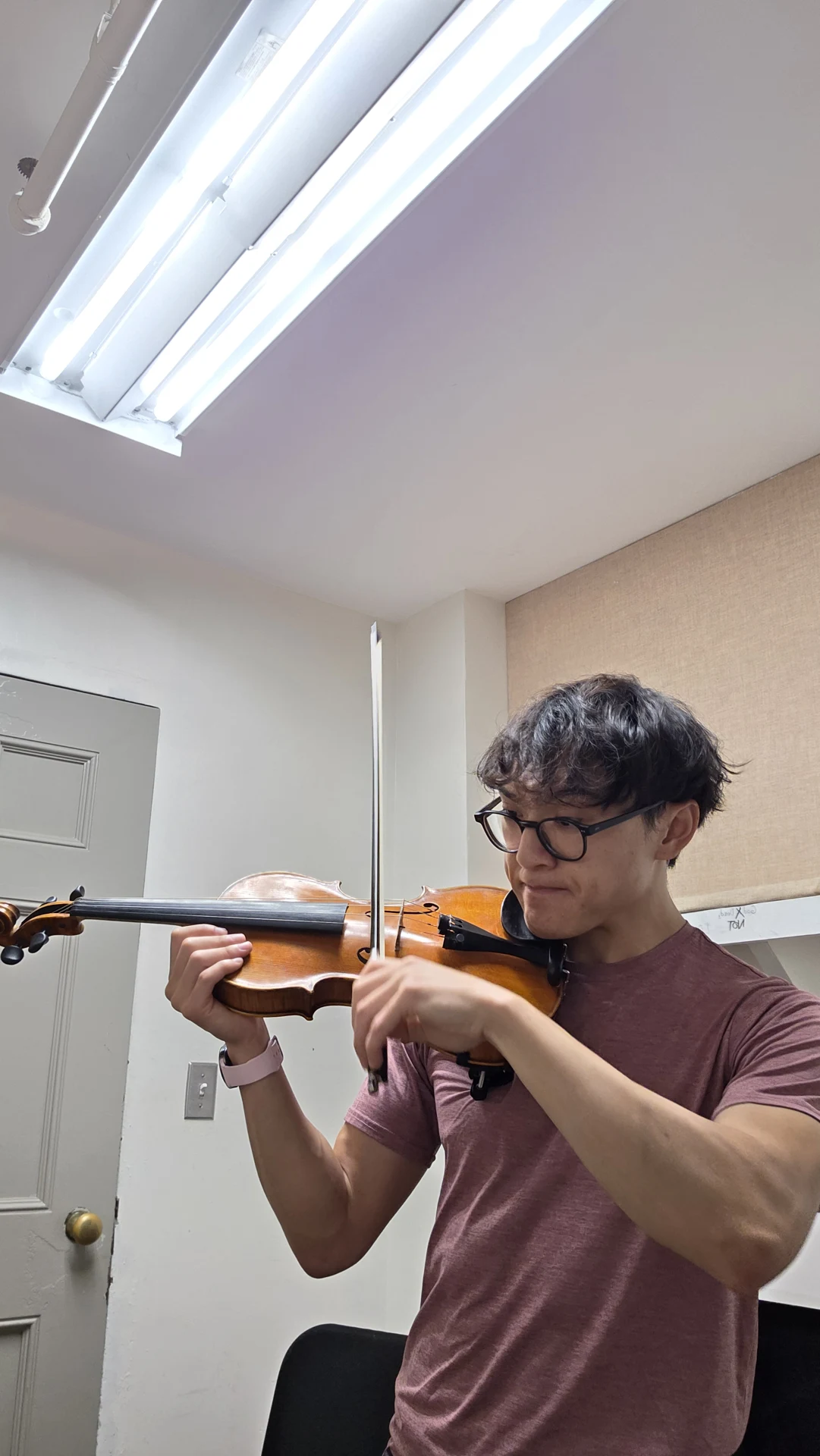
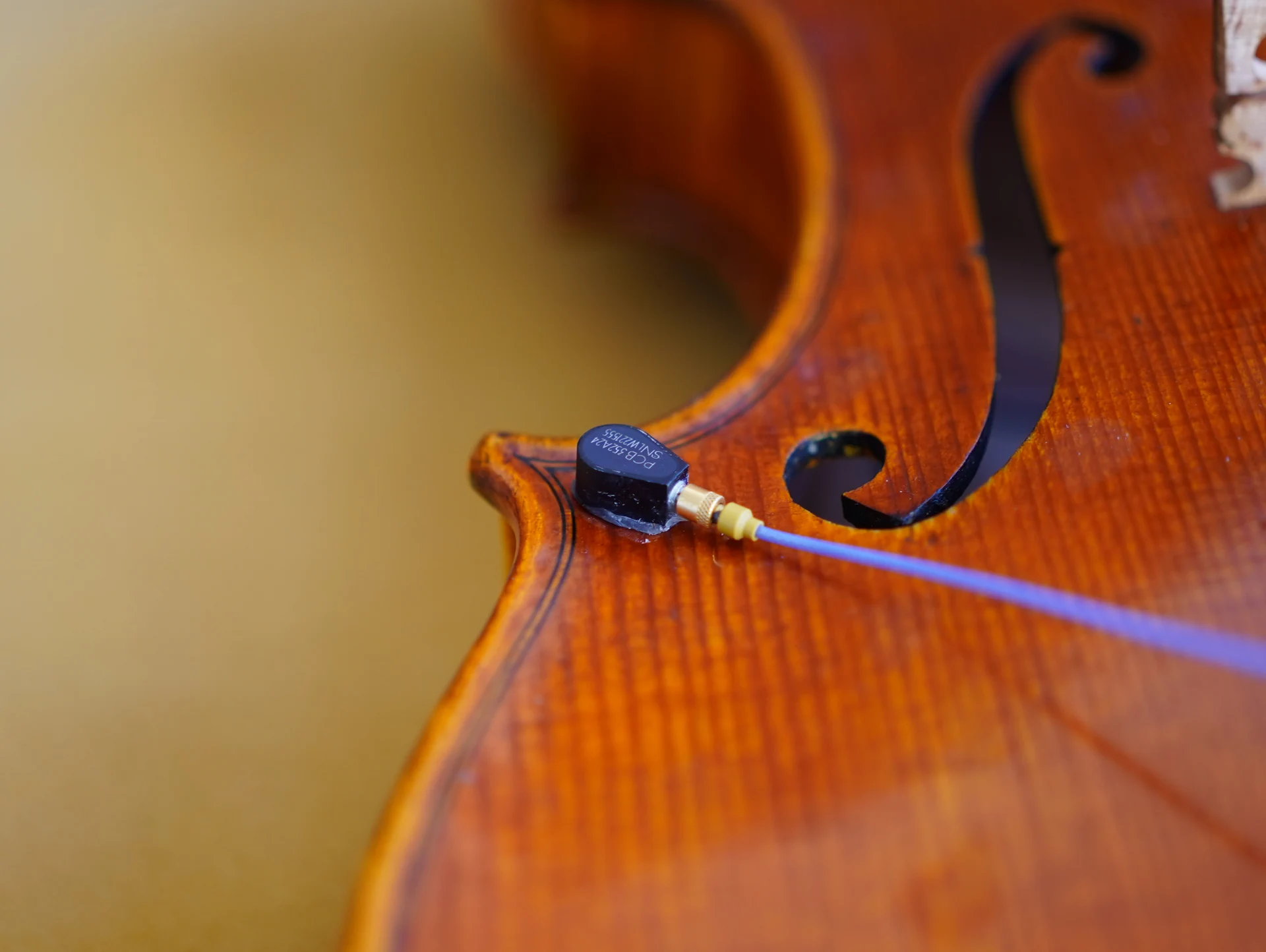
As a violinist, I wanted to understand how differences in an instrument’s structure appear in its vibration and sound. My master’s thesis compared a 2019 William Bagnato violin and a 2021 Franz Hoffman Vienna violin using accelerometers, a modal hammer, and a measurement microphone.
I examined the harmonic response of the top plate, the response near the bridge, and the sound radiated into an anechoic room. I also worked to control differences in strings and accessories so the comparison focused more directly on the instruments’ wooden bodies.
Mapping the vibrating surface
I defined 67 accelerometer locations across each top plate, including the perimeter, the central region, and points near the bridge. For the string-excitation measurements, I recorded three runs at each point and compared spatial averages for the whole plate, its top, middle, and bottom regions, and its edges.
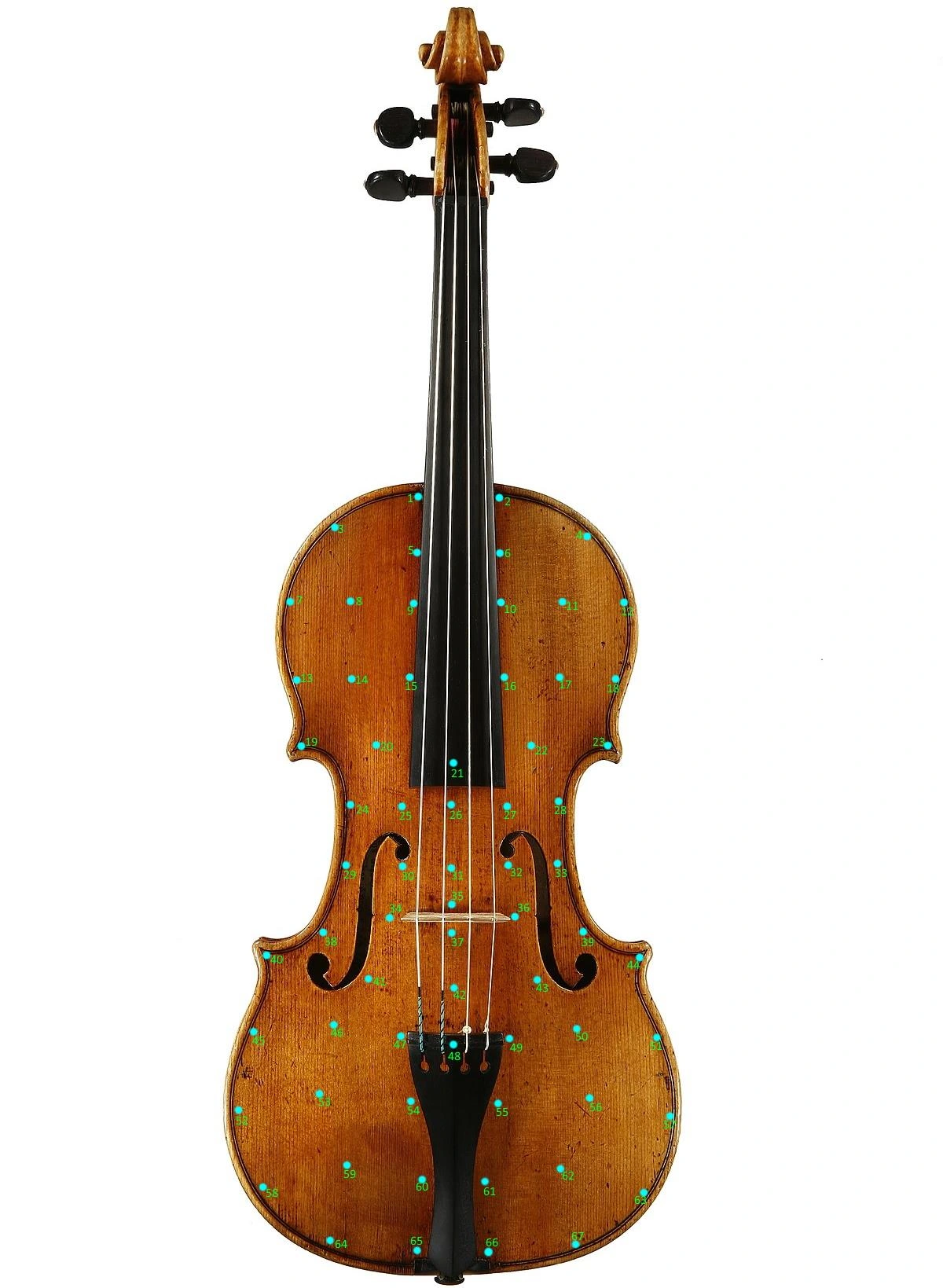
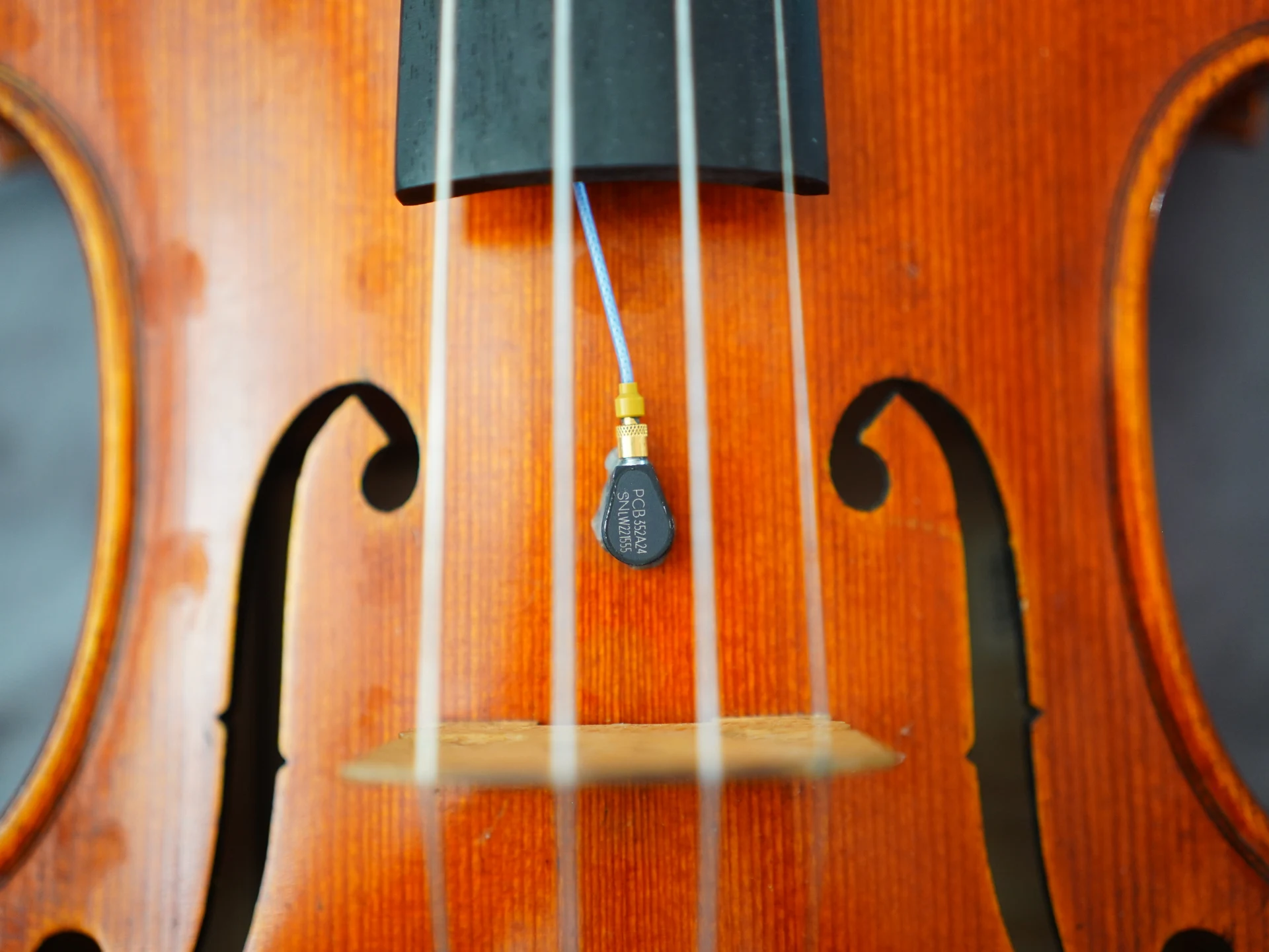
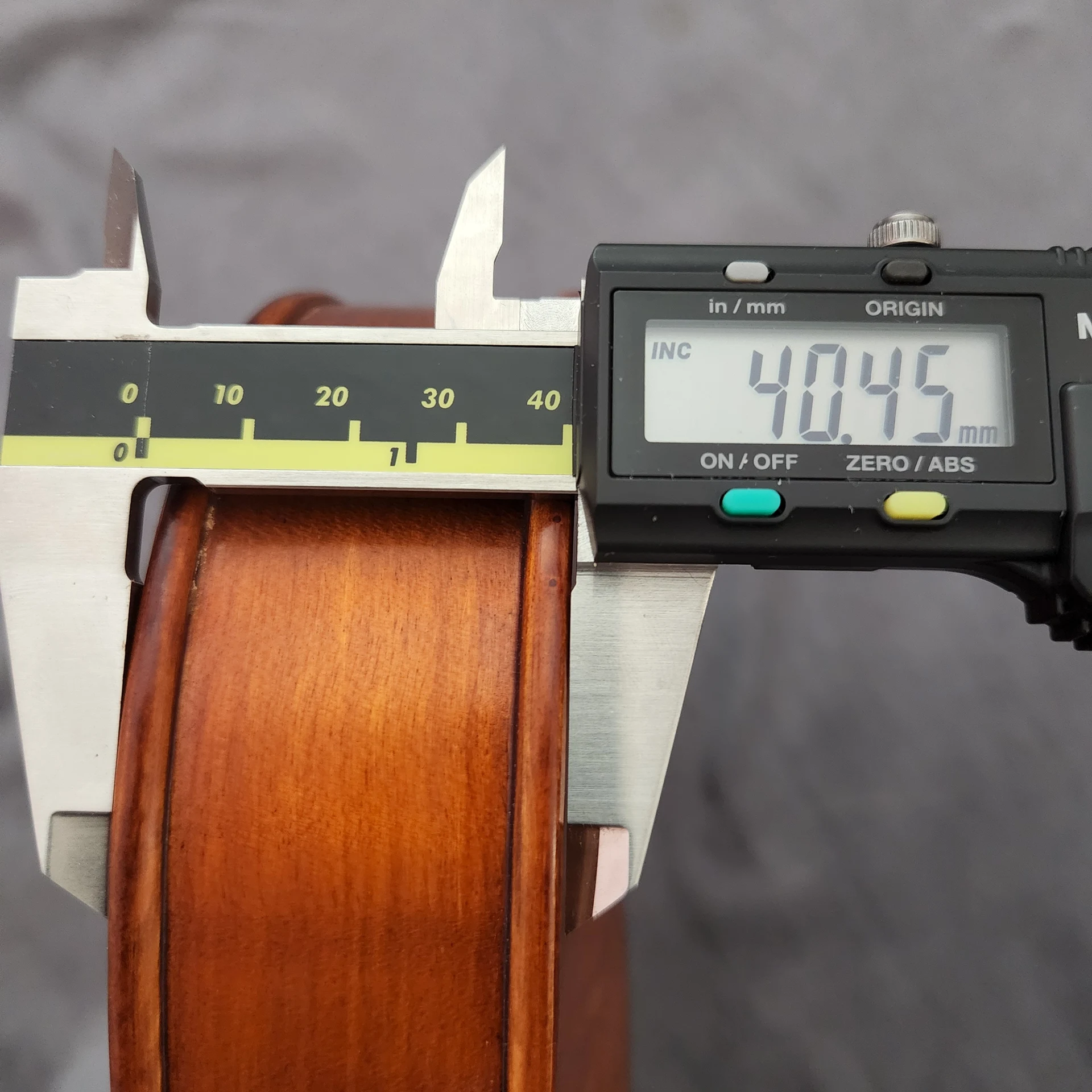
For bridge excitation, I applied the modal hammer at the top center of the bridge and measured four surrounding points. This gave a complementary view of the body’s response to an impact, alongside the harmonic response generated by plucking the G and E strings.
Data acquisition and signal processing
I built a LabVIEW acquisition program to display sensor signals and calculate frequency spectra. The setup used a National Instruments 9234 module with integrated signal conditioning and anti-aliasing filters; the recorded spectra were organized for comparison and spatial averaging.
Excitation consistency was part of the experiment. I kept the string-plucking location fixed, checked the plucking motion with an accelerometer on the pick, and screened hammer strikes for misses and large force differences.
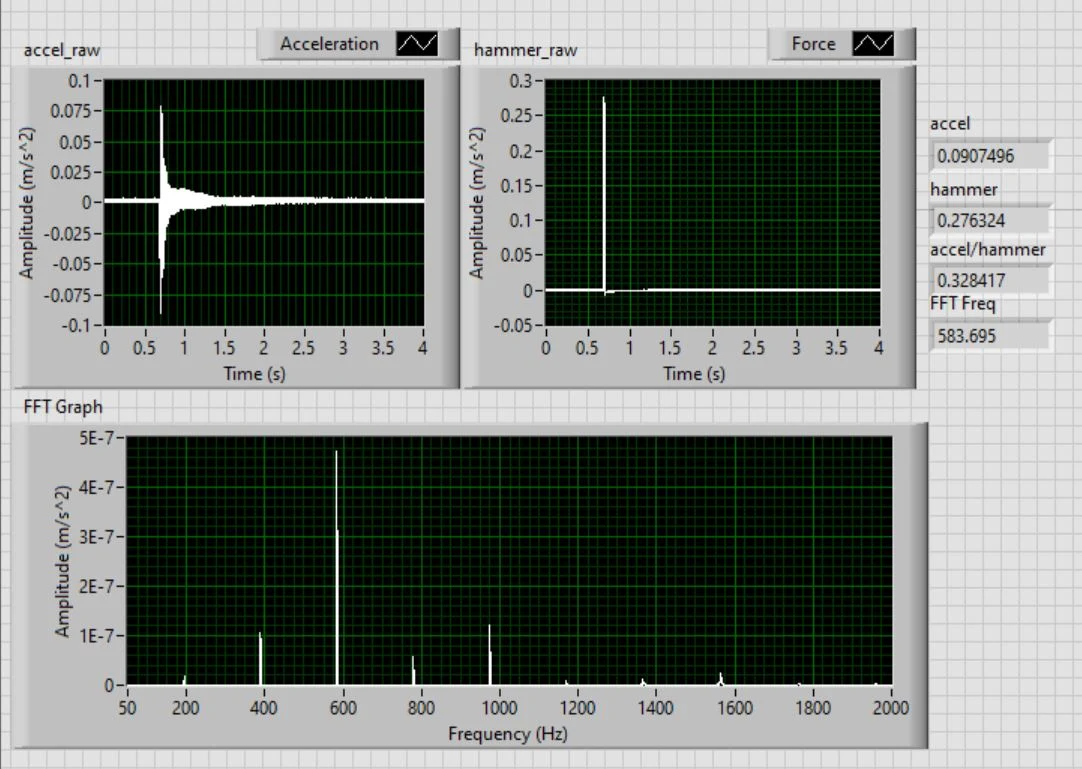
Vibration results
The string-excitation spectra show how harmonic amplitudes vary between the two instruments. Spatial averaging made it possible to compare the full top plate while also examining where particular frequency components were strongest.
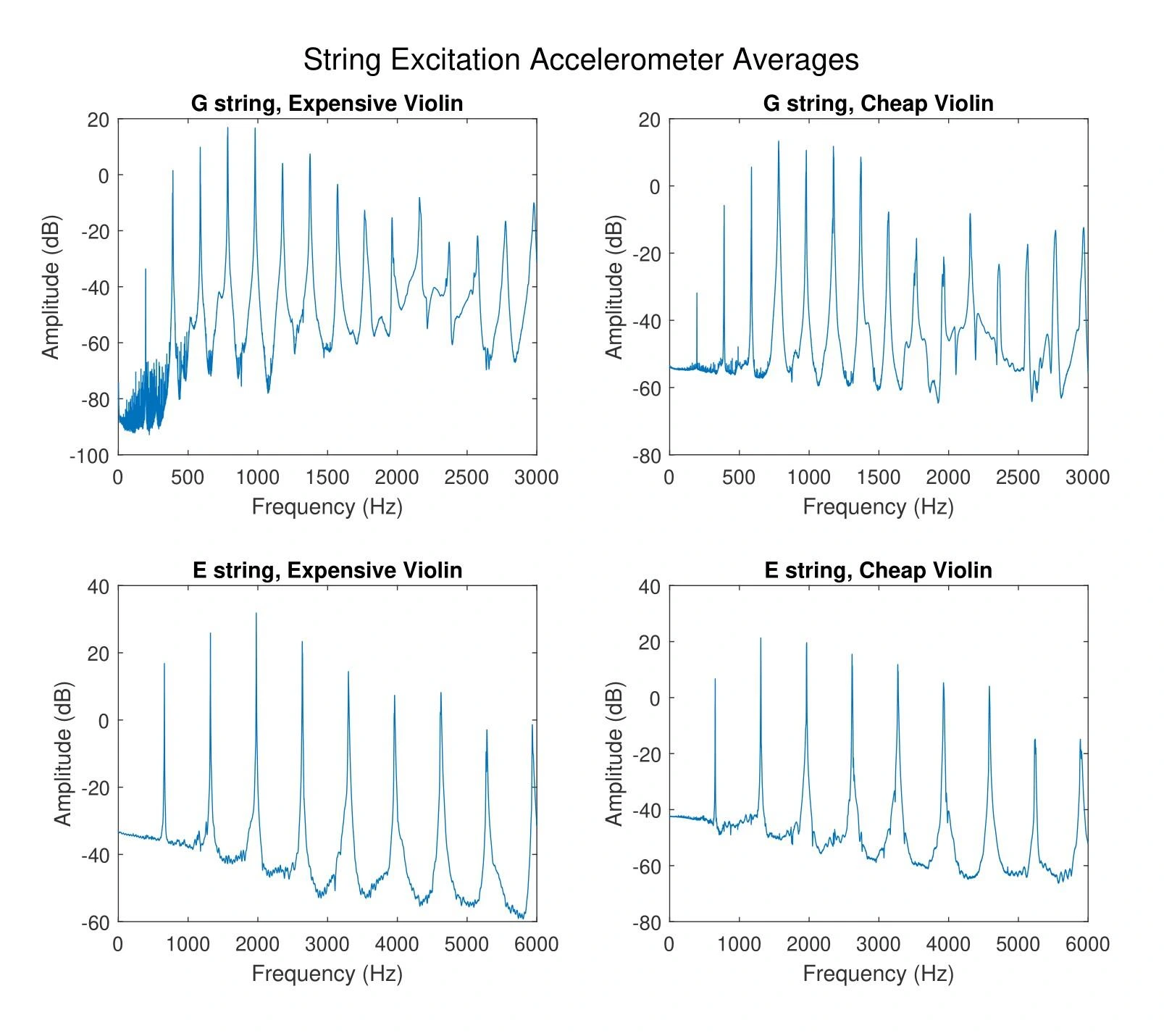
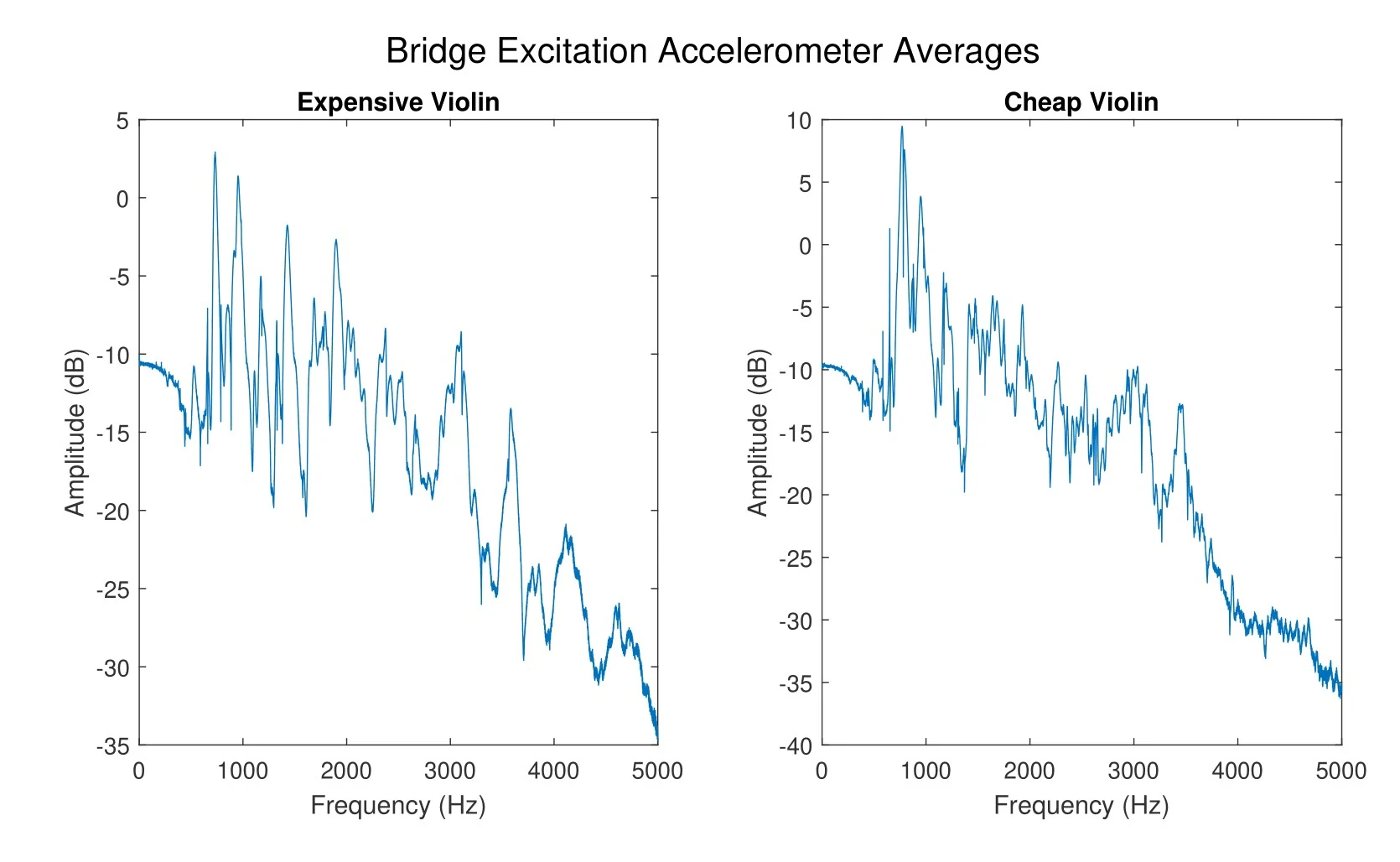
In this pair of instruments, the Bagnato violin showed stronger lower-frequency harmonic response in the middle region of the top plate. The bridge-impact measurements also showed different distributions of response peaks, linking the comparison to both excitation method and measurement location.
Acoustic measurements
I recorded the plucked-string response in CSULB’s anechoic chamber, with the microphone positioned 3 feet 3 inches above the top plate. Foam support, microphone placement, and equipment positioning were chosen to keep the measurement conditions consistent.
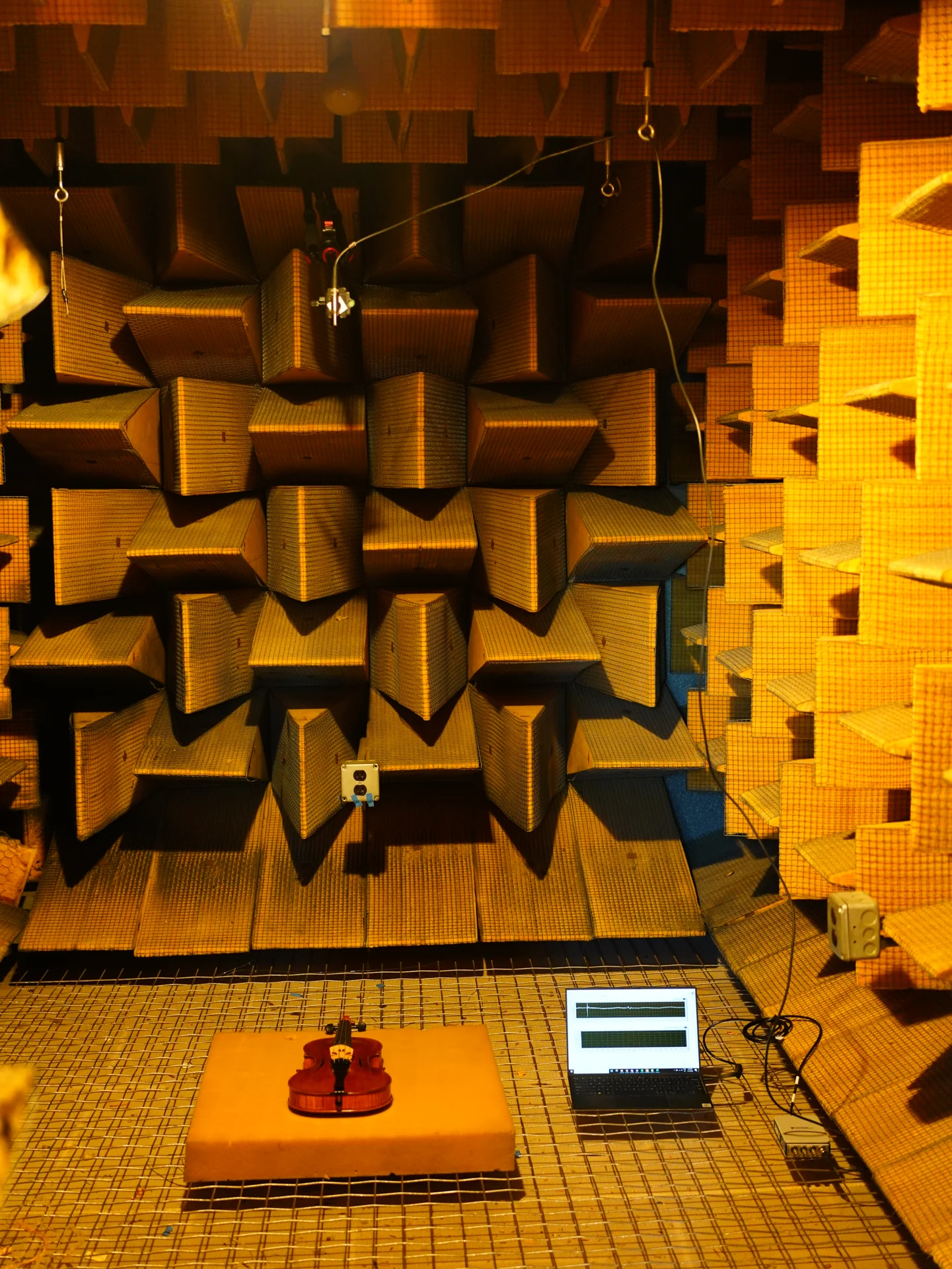
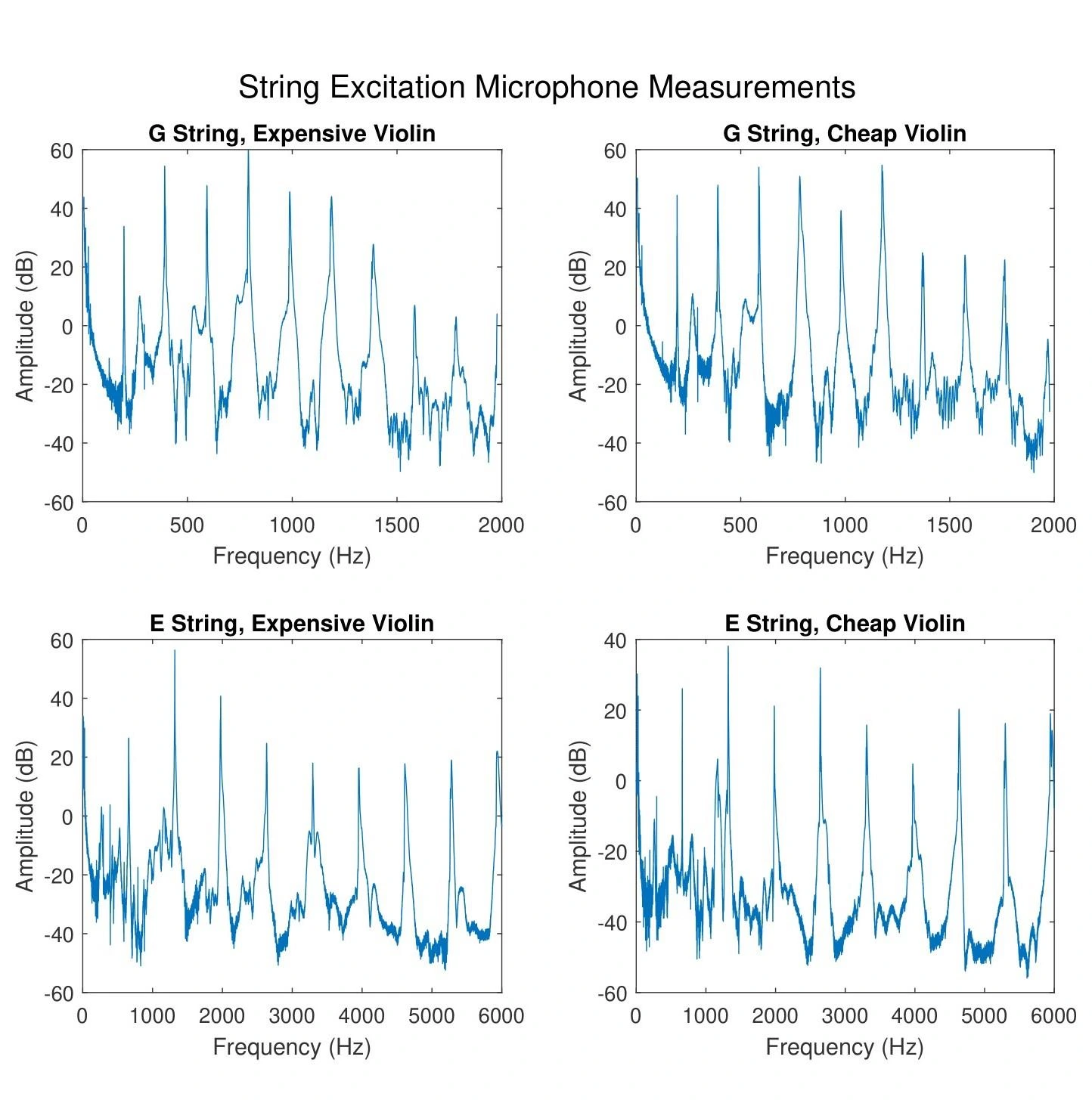
I compared the microphone spectra with the accelerometer measurements and examined the balance of lower and higher harmonics. The thesis interprets these results using equal-loudness contours, relating the measured differences to the tonal character of the two instruments.
Master’s thesis
Structural Properties and Perceived Acoustic Quality of Modern Violins.
Alan Pham. MS in Mechanical Engineering, California State University, Long Beach, May 2022.
The complete thesis includes the experimental design, instrumentation, signal-processing methods, measurement maps, and vibration and acoustic results.
Thesis committee: Jalal Torabzadeh (chair), Allen Teagle, and Emel Demircan.