Spring-driven prototypes
Achintya Sanjay and I developed three physical prototypes for a course with obstacles, slopes, and turns. We began with a spring-driven worm, then a quadruped, before building the final robot with soft treads.
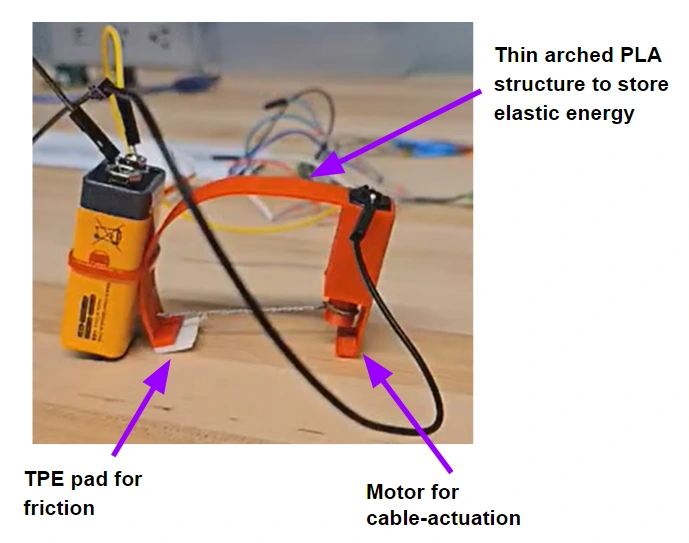
The worm used an arched PLA spring and a motor-driven spool. Winding a string bent the spring and stored elastic energy; the string then slipped from the spool, releasing that energy in a rapid movement. A TPE contact pad and the placement of the battery helped turn the cycle into forward motion.
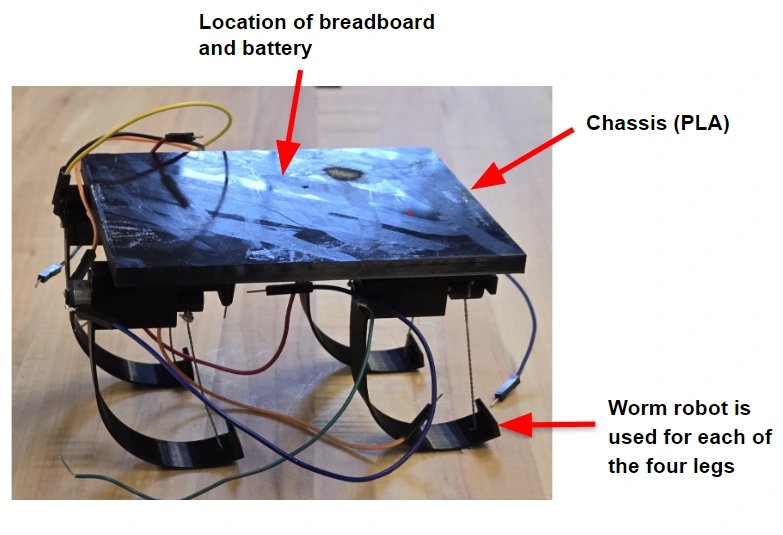
We also tested a quadruped using four spring-driven units as legs. That experiment made the role of timing and weight distribution clear: combining four working actuators did not automatically produce a coordinated gait. We moved to independently driven treads for controllable propulsion and steering.
Tread and chassis design
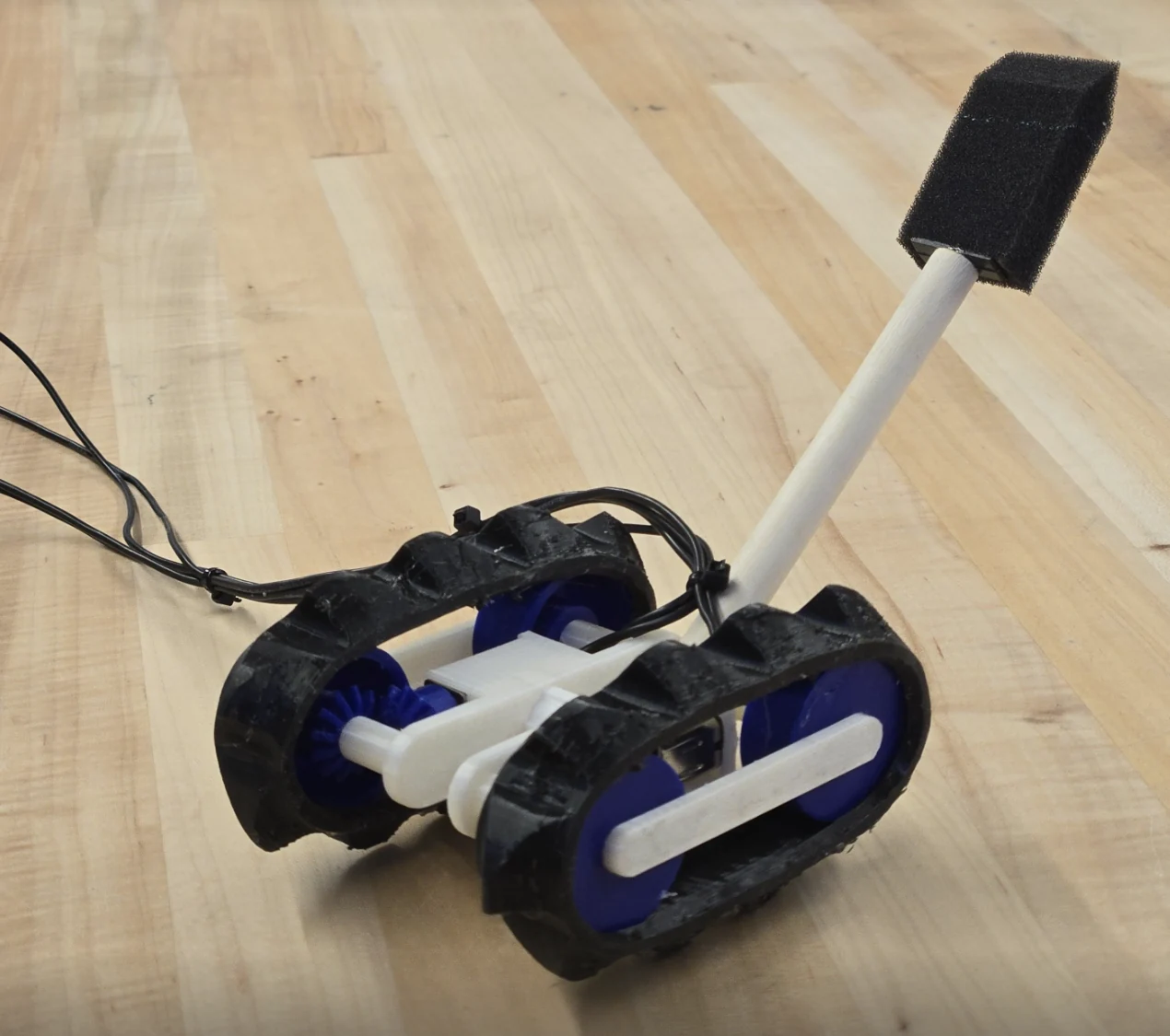
The final robot used two motor-driven sides connected by a compliant TPE bridge. That connection allowed the sides to respond to uneven terrain, while flexible TPU treads wrapped around the wheels and contacted the ground. A rear tail resisted backward tipping as the robot entered a slope or climbed an obstacle.
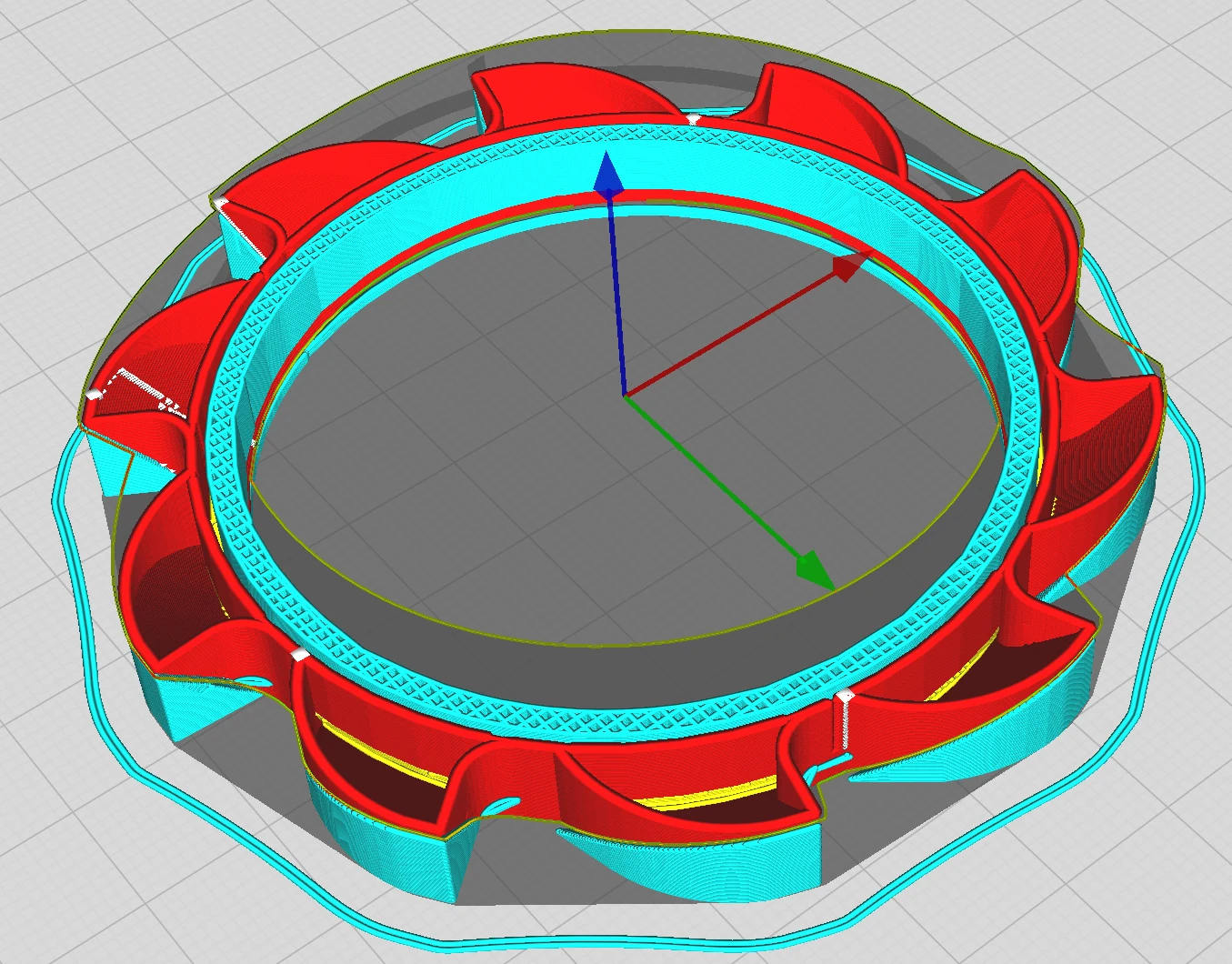
We iterated the tread material and printing parameters to improve the part quality. We also tested surface coatings: the silicone trial reduced useful traction, while a flexible glue coating gave better ramp performance.
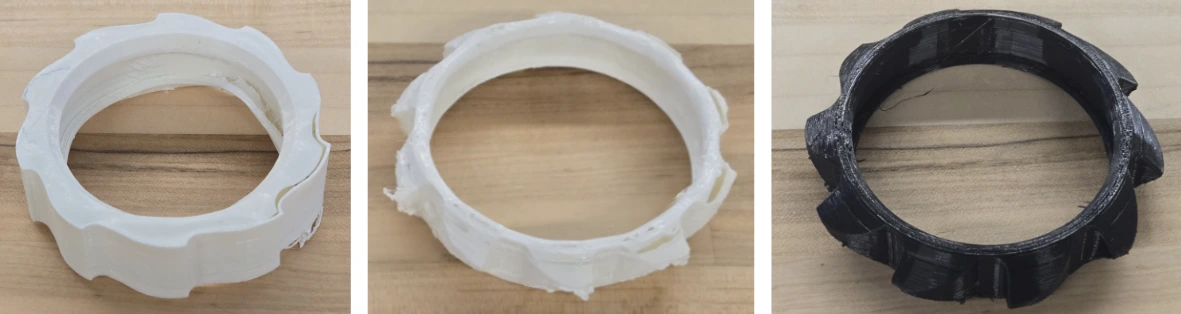
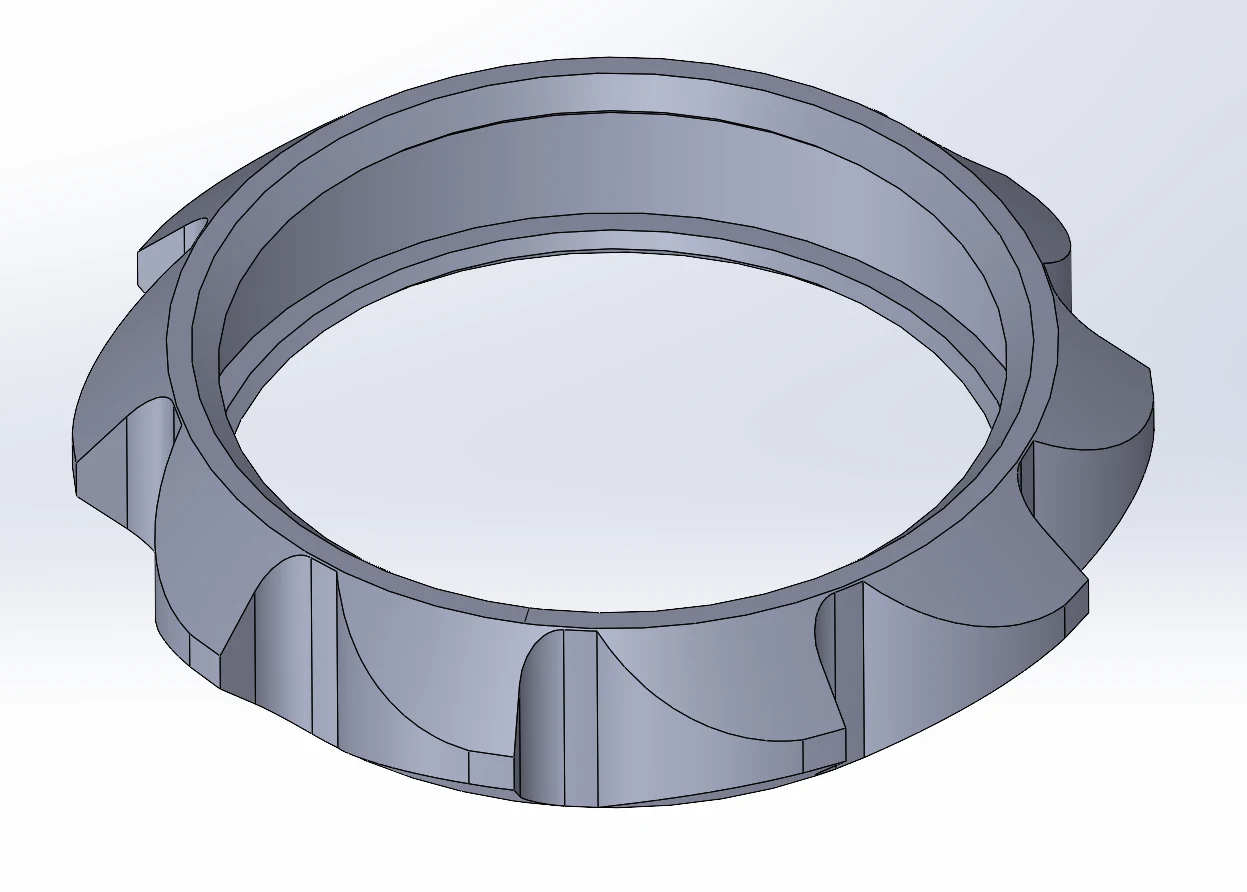
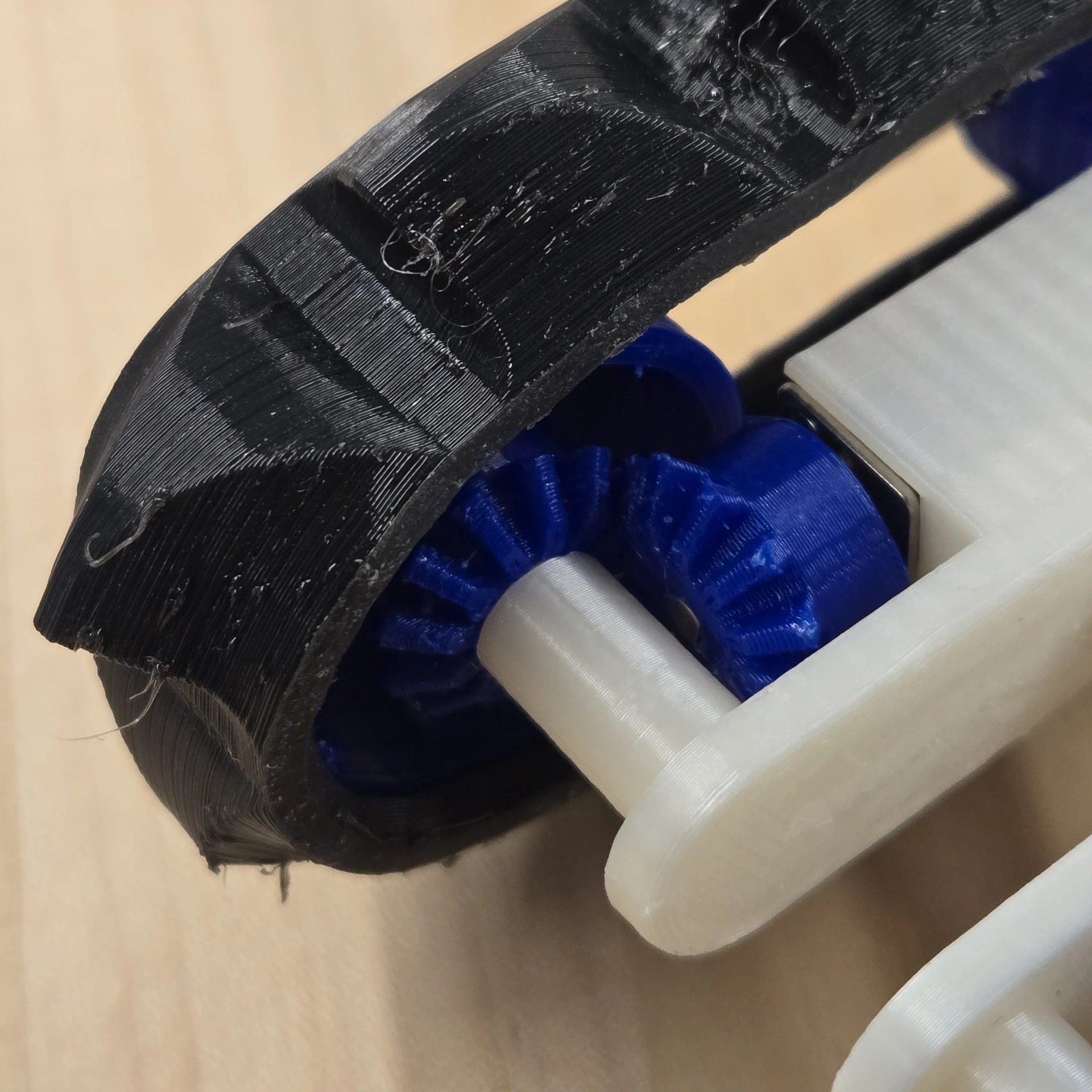
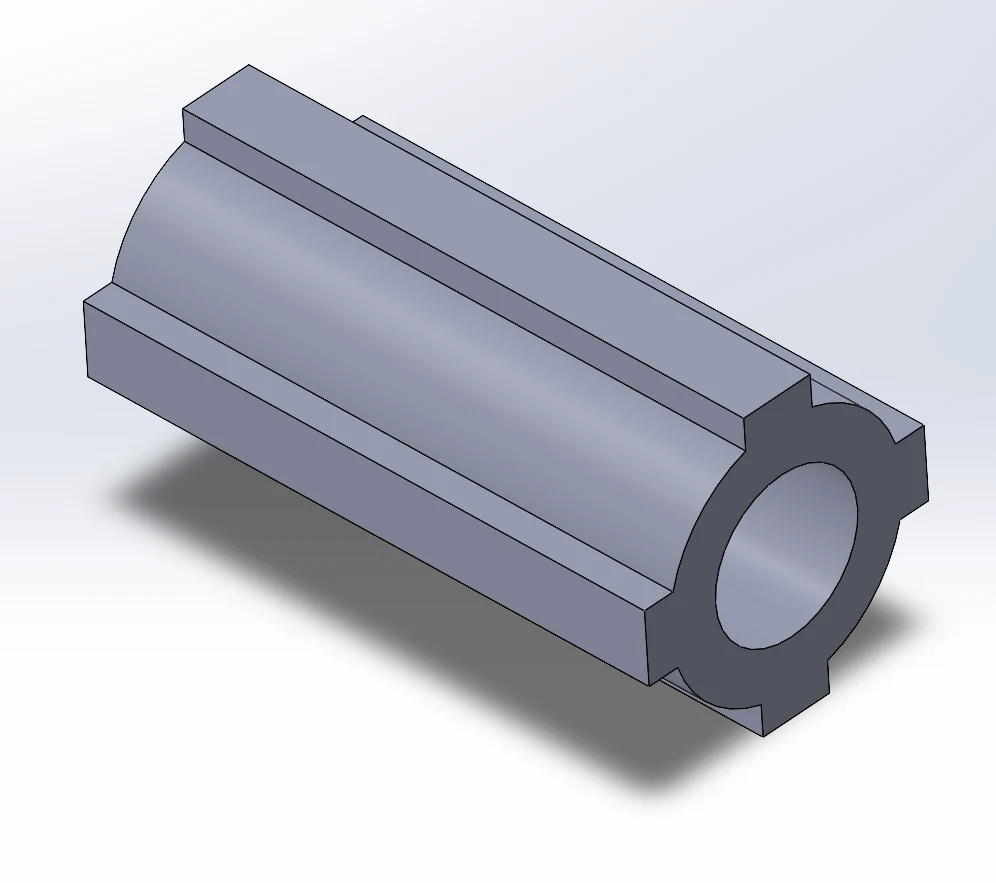
The compliant bridge used radial grooves that keyed into matching features on the chassis. It transmitted loads between the two sides while allowing relative bending and twisting as the treads encountered uneven terrain.
Control hardware
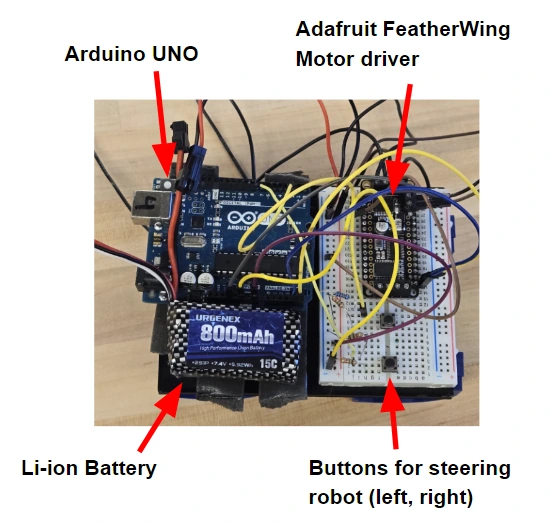
Two DC motors drove the tracks through single-stage gear transmissions. An Arduino UNO and Adafruit FeatherWing motor driver controlled the motors, with separate buttons reversing the left and right sides for steering.
The handheld control assembly brought the battery, motor driver, and buttons together for testing. Differential drive let us compare straight motion, turning, and obstacle approach using the same mechanical platform.
Obstacle and ramp testing
The report documents an early version tipping at an obstacle of about 5 mm, while the version with the tail could traverse obstacles above 10 mm. The tail normally stayed clear of flat ground and engaged as the chassis pitched upward.
Team contributions and project report
My work included body CAD and assembly. Achintya and I developed and tested the prototypes together and coauthored the final report. The project received first place in WPI’s 2024 Intercollegiate Soft Robotics Competition.
RBE 530/ME 530 Soft Robot Project Competition.
Alan Pham and Achintya Sanjay, 2024.
The report documents all three robot concepts, the fabrication choices, control hardware, and the obstacle and traction tests.