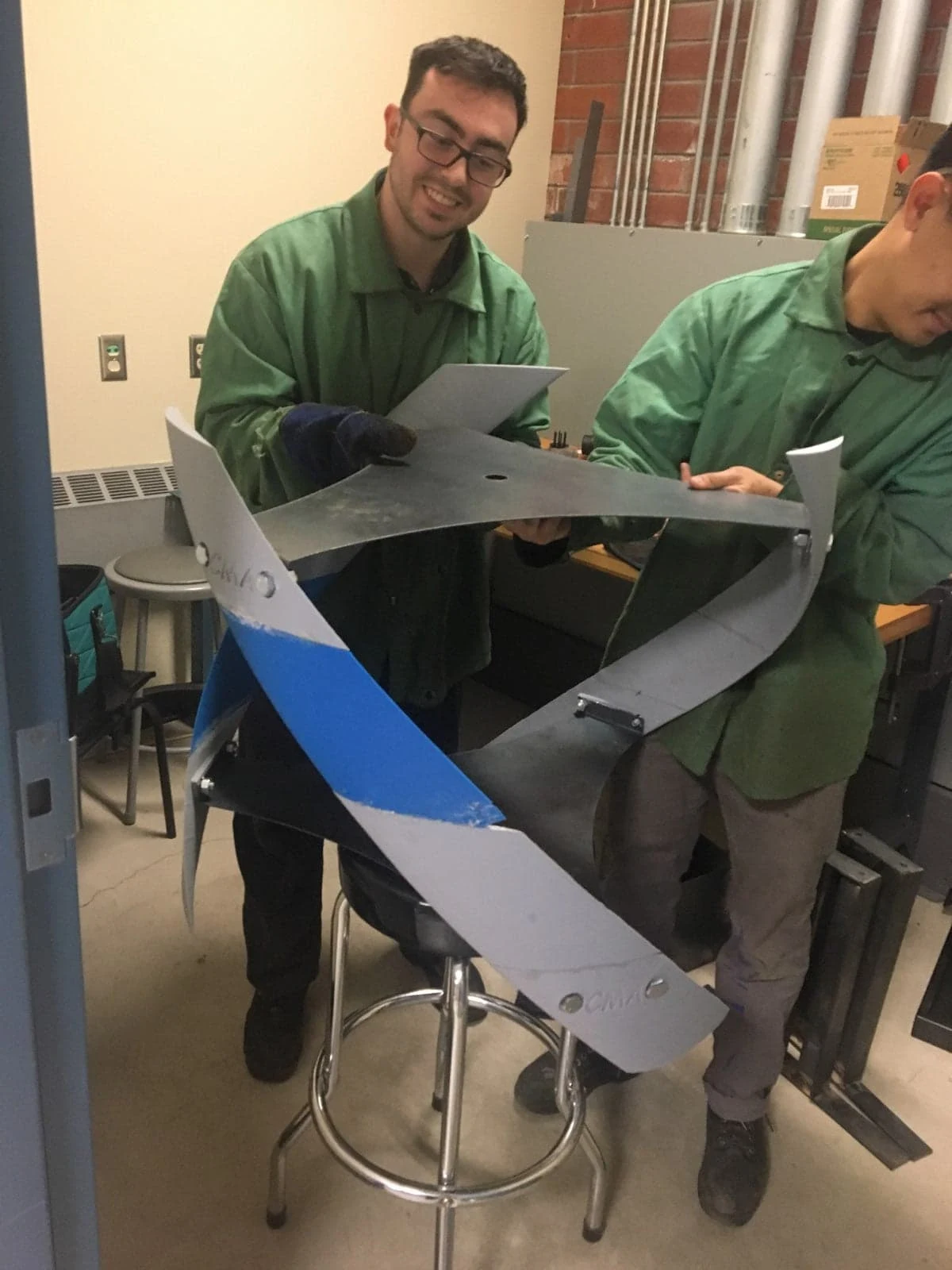
Flume prototype
Our five-person senior design team investigated a helical turbine for the tidal currents near Cal Maritime. We began with a small printed model in the campus water flume, using the test to check whether the blade geometry could produce sustained rotation before building a larger assembly.
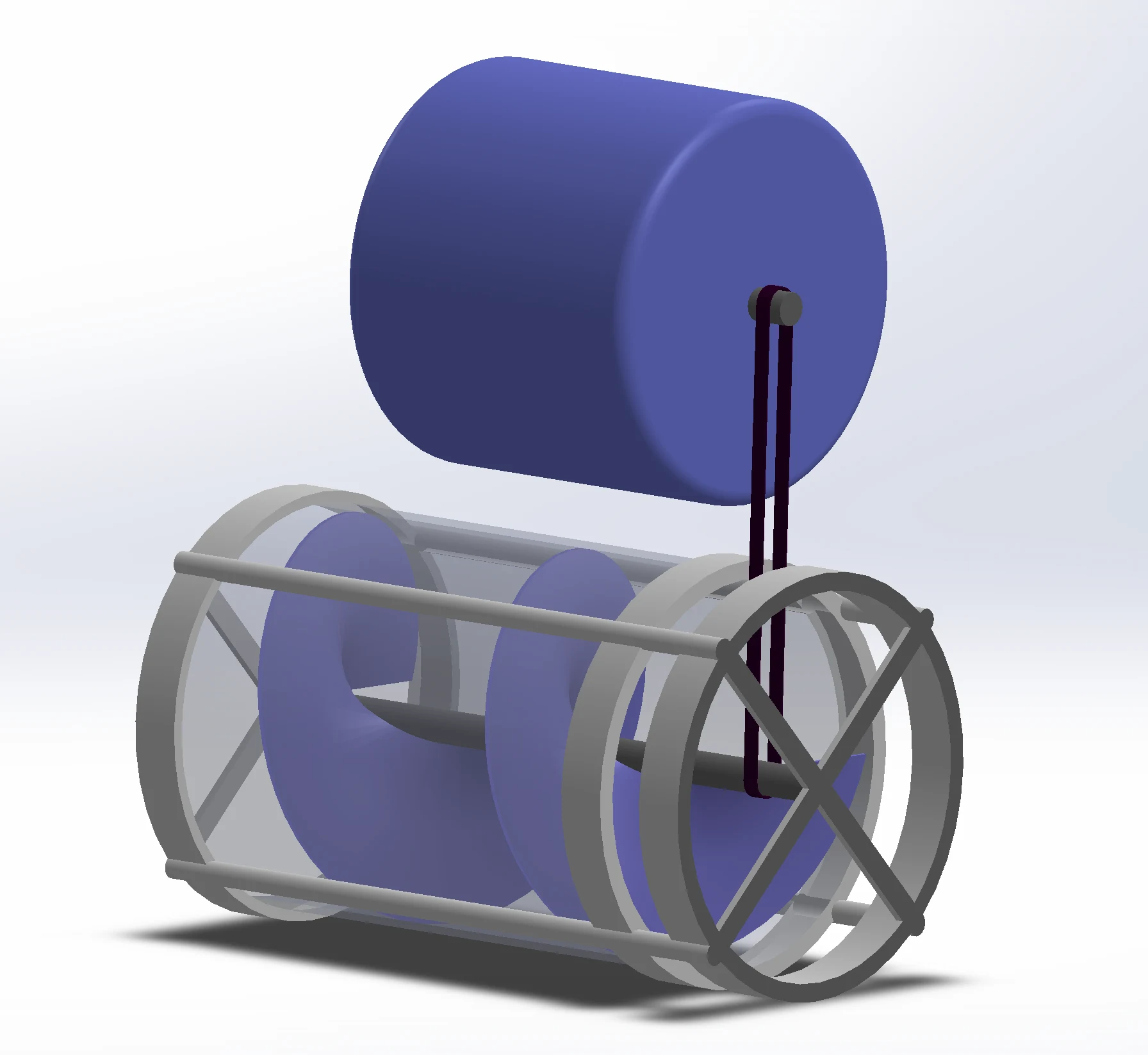
The flume prototype informed the full-size assembly, including its blade construction, support structure, and generator integration.
Blade fabrication and assembly
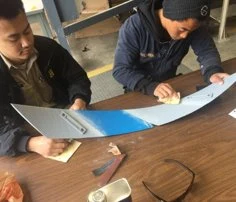
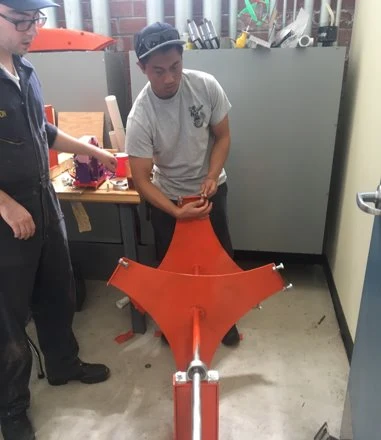
The full-size blade geometry exceeded the printer’s build volume. We printed the blades in sections, joined them with dowels and adhesive, and added fiberglass, resin, and paint. Steel supports and a central shaft carried the rotating assembly.
Support structure and test site
We revised the mounting structure with linked supports and counterbalanced members that rested on the lower dock, securing the rotating assembly for water testing.
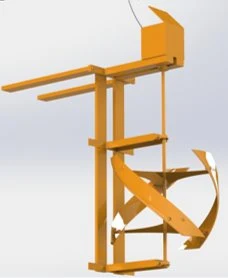
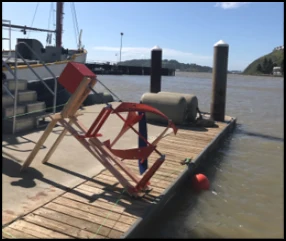
The dock installation let us evaluate the complete assembly under the currents available at the test site.
Generator and marina tests
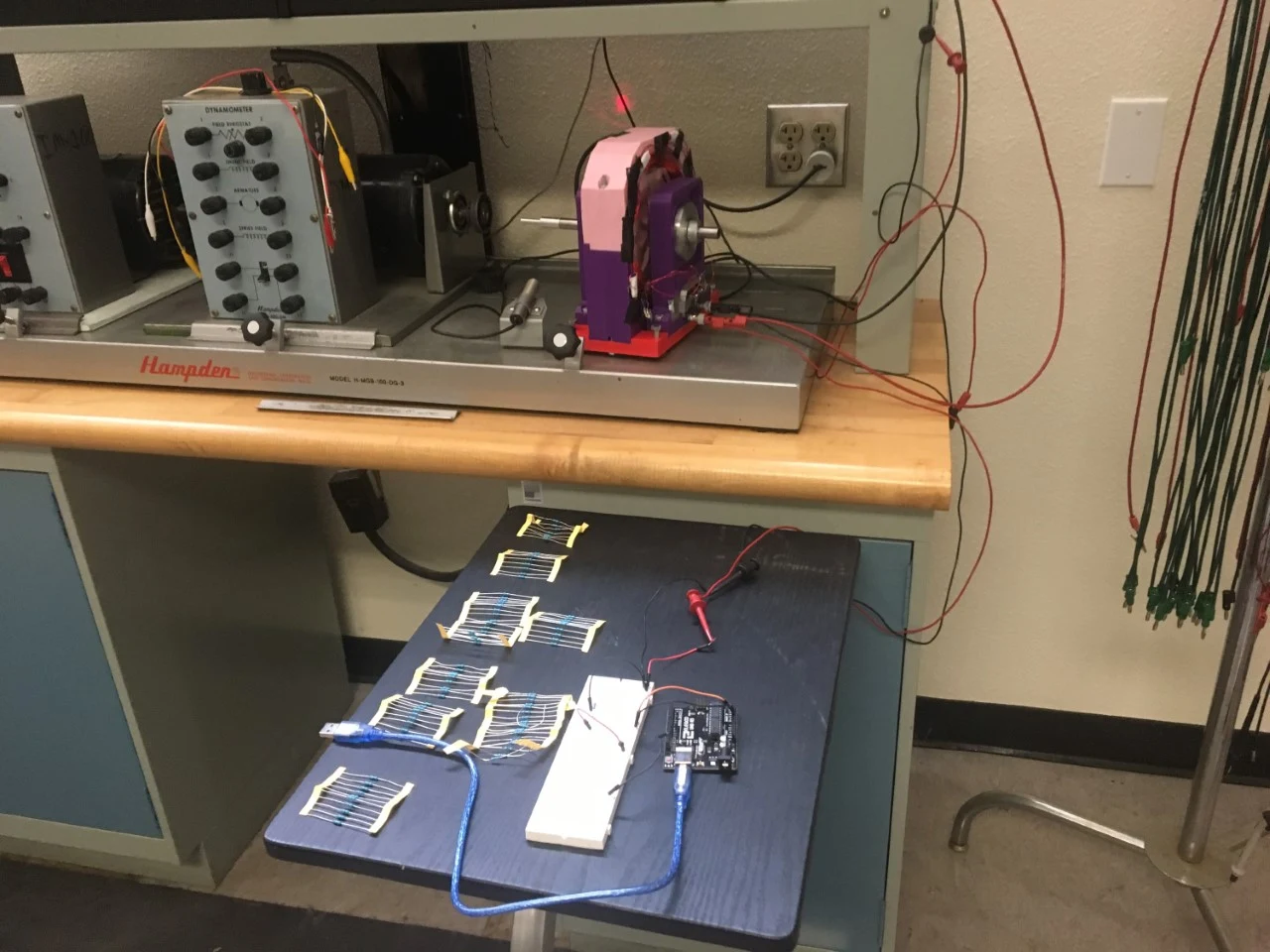
We integrated a generator previously built by Scott Moore and Jon Lipski. The team changed its wiring configuration, tested resistor loads on the bench, and examined the relationship between shaft speed and electrical output before connecting it to the turbine.
Marina trials demonstrated rotation of the full-size turbine. Lower-than-anticipated speeds made matching the available current, rotor, and generator loading the key finding of the field tests.
Our final report used the bench and field results to identify follow-up changes to the test location, generator gearing, and rotating mass.
Team contributions
I was a member of the design team and a coauthor of the final report with Cameron Adlawan, Nicholas Aquilino, Matthew Dejesus, and Marc Johnson. The fabrication and test results shown here are team work.
Hydro-Electric Tidal Turbine Team. Senior Design Final Report, Mechanical Engineering 494, Cal Maritime, April 28, 2019.