Printed surface patterns
I began my PhD by exploring how a connected printed surface could deform into different shapes. In fall 2023, I designed and printed hexagonal, star-shaped, and square patterns, comparing how their geometry changed when stretched or pulled with strings.
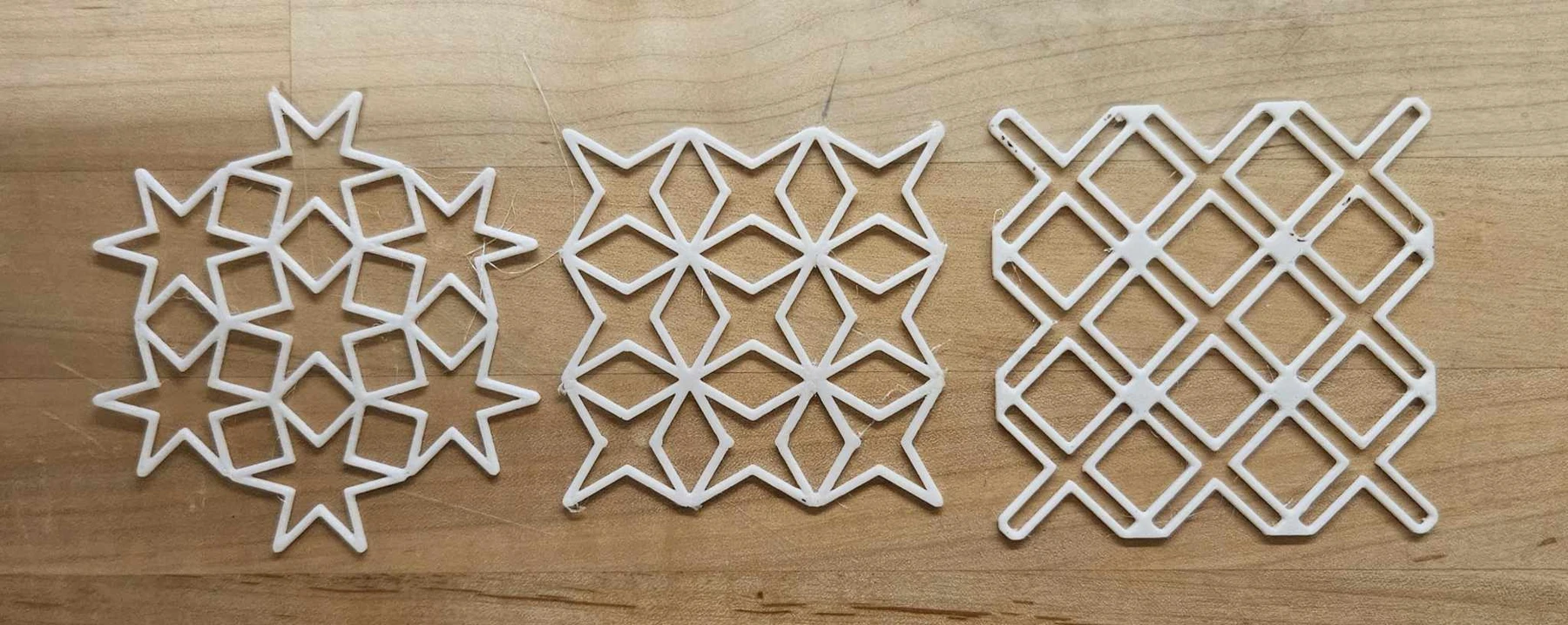
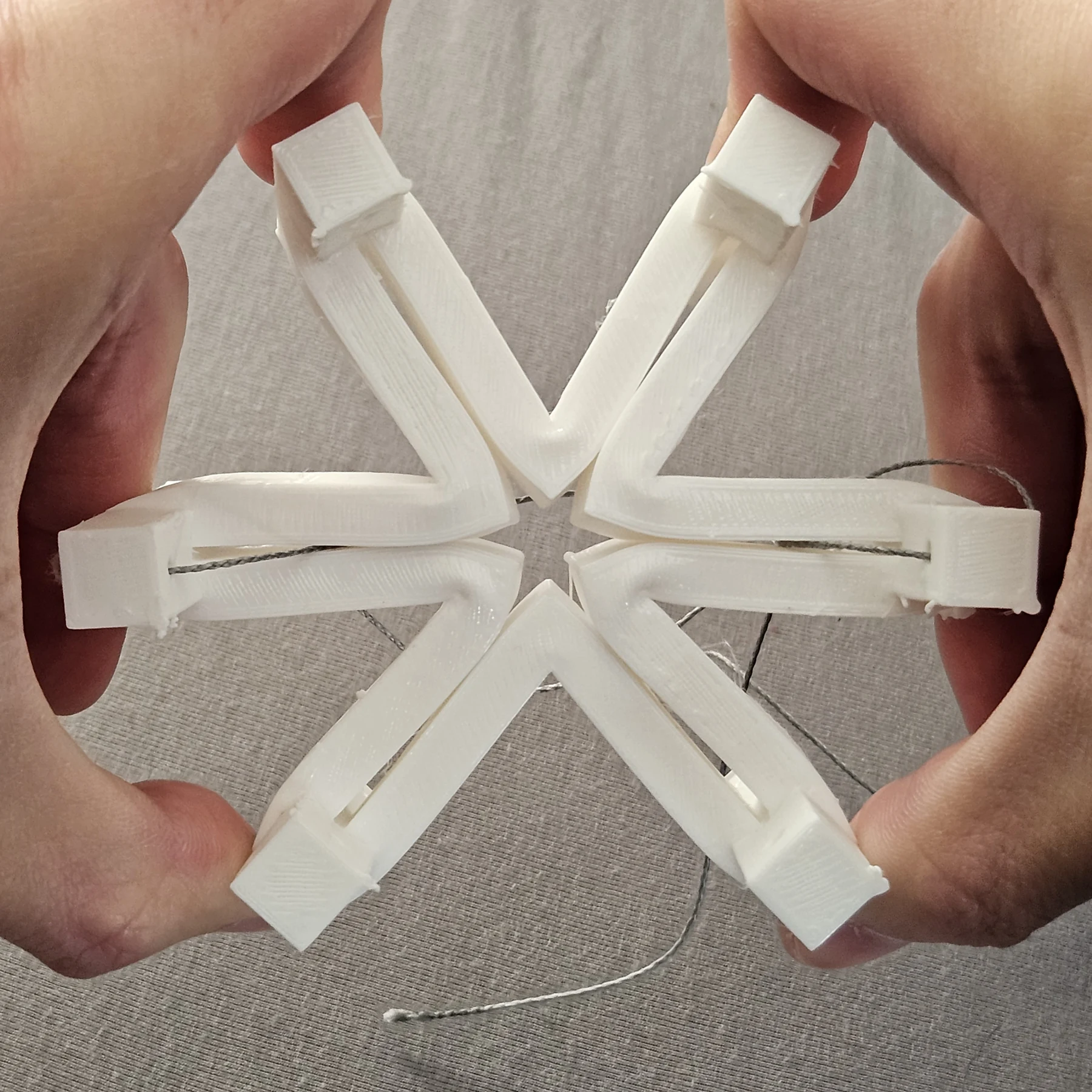
The goal was an expressive shape display: a surface that could produce spatially varied motion, including the reaching and curling behavior that first drew me to the problem.
Cable-actuated modules
I developed printed modules with cable routing, connection clips, and compact electronics, then explored how several modules could work together. The prototypes included a single module carrying its control boards and a connected 2×2 assembly.
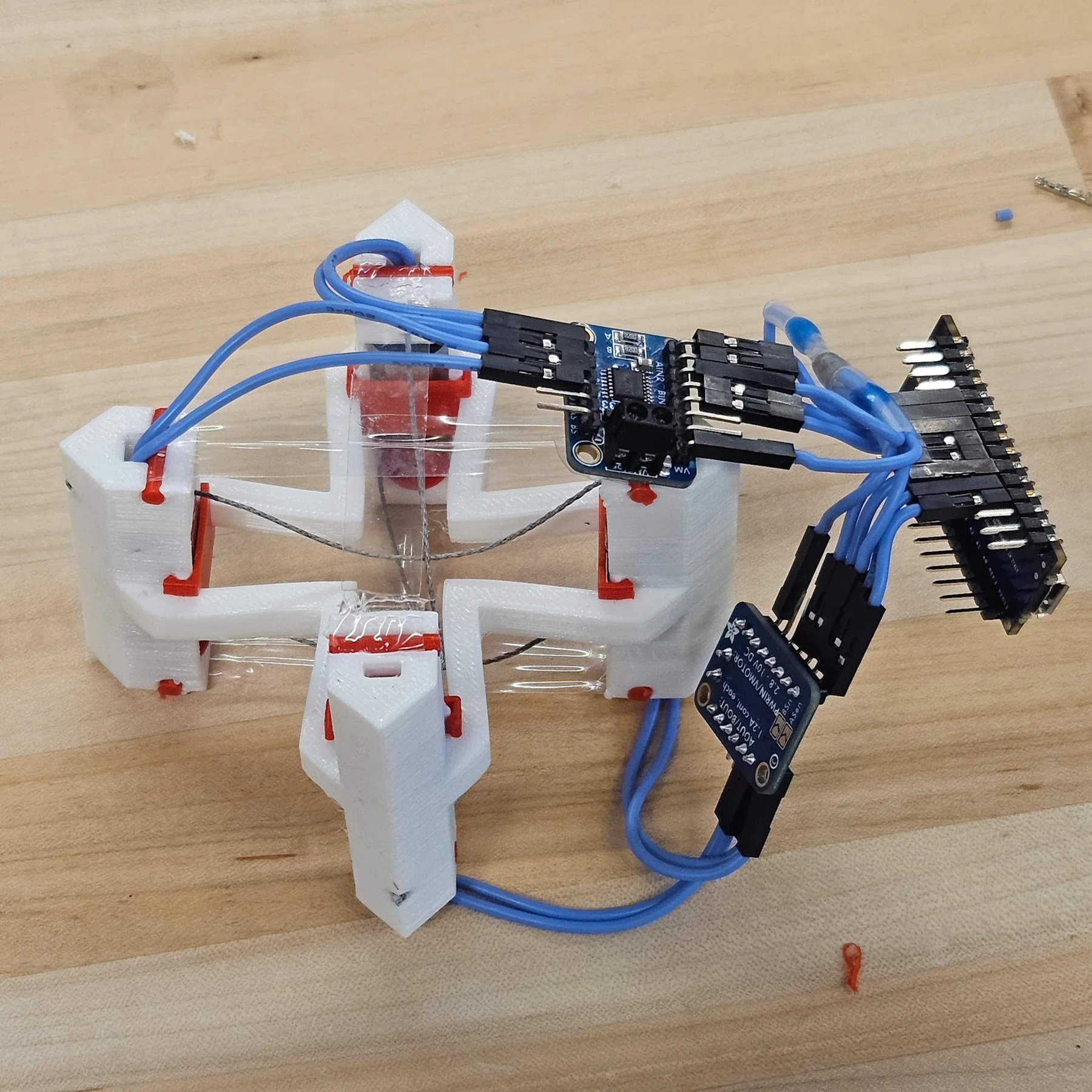
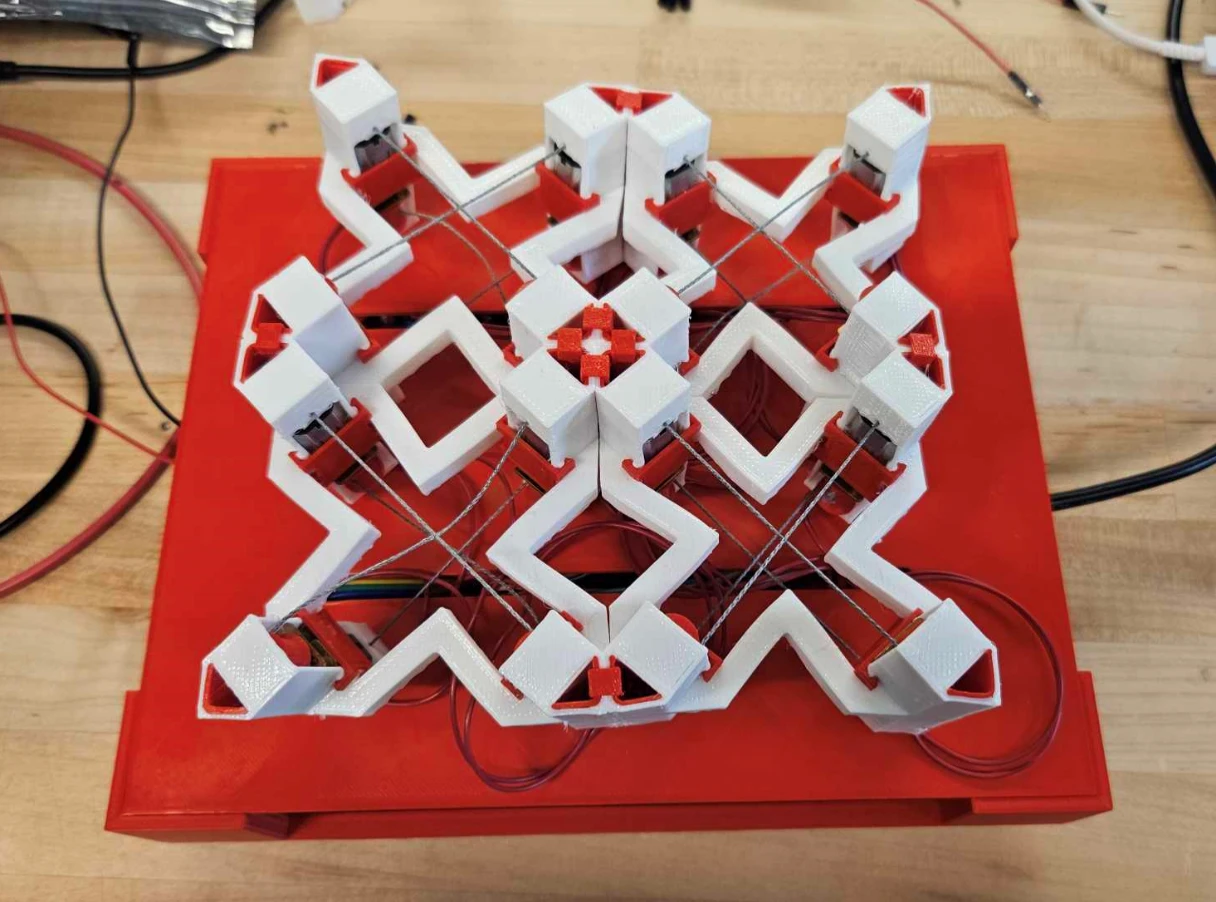
These builds made module connections and actuator packaging part of the surface-design problem. I kept looking for a simpler way to turn local changes into a useful overall shape.
Pin-configured Sarrus surfaces
With compliant Sarrus linkages, bringing a cell’s ends together expands it laterally. I used printed pins to retain selected cells in expanded configurations and explored how different spatial patterns reshaped the connected array.
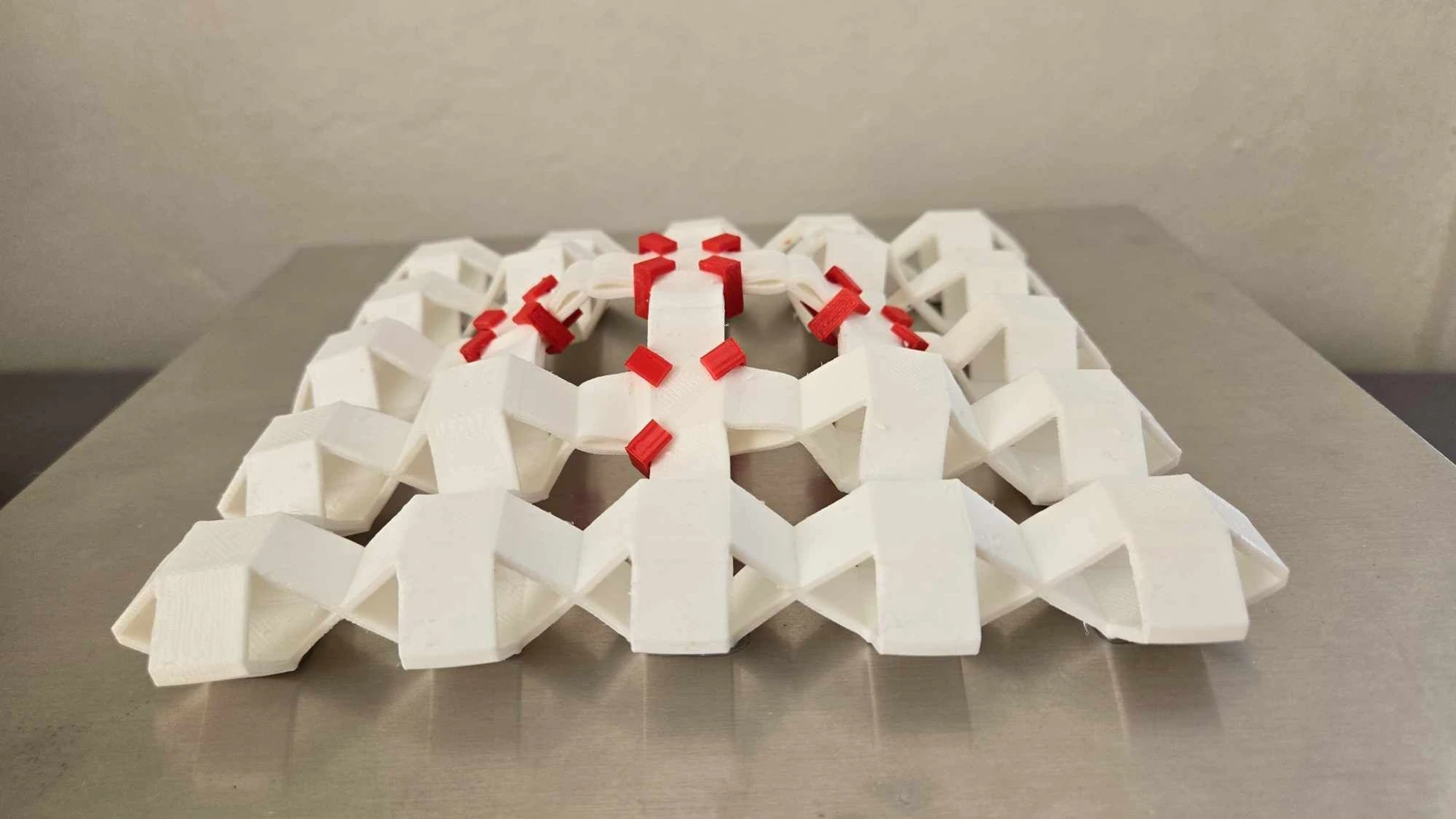
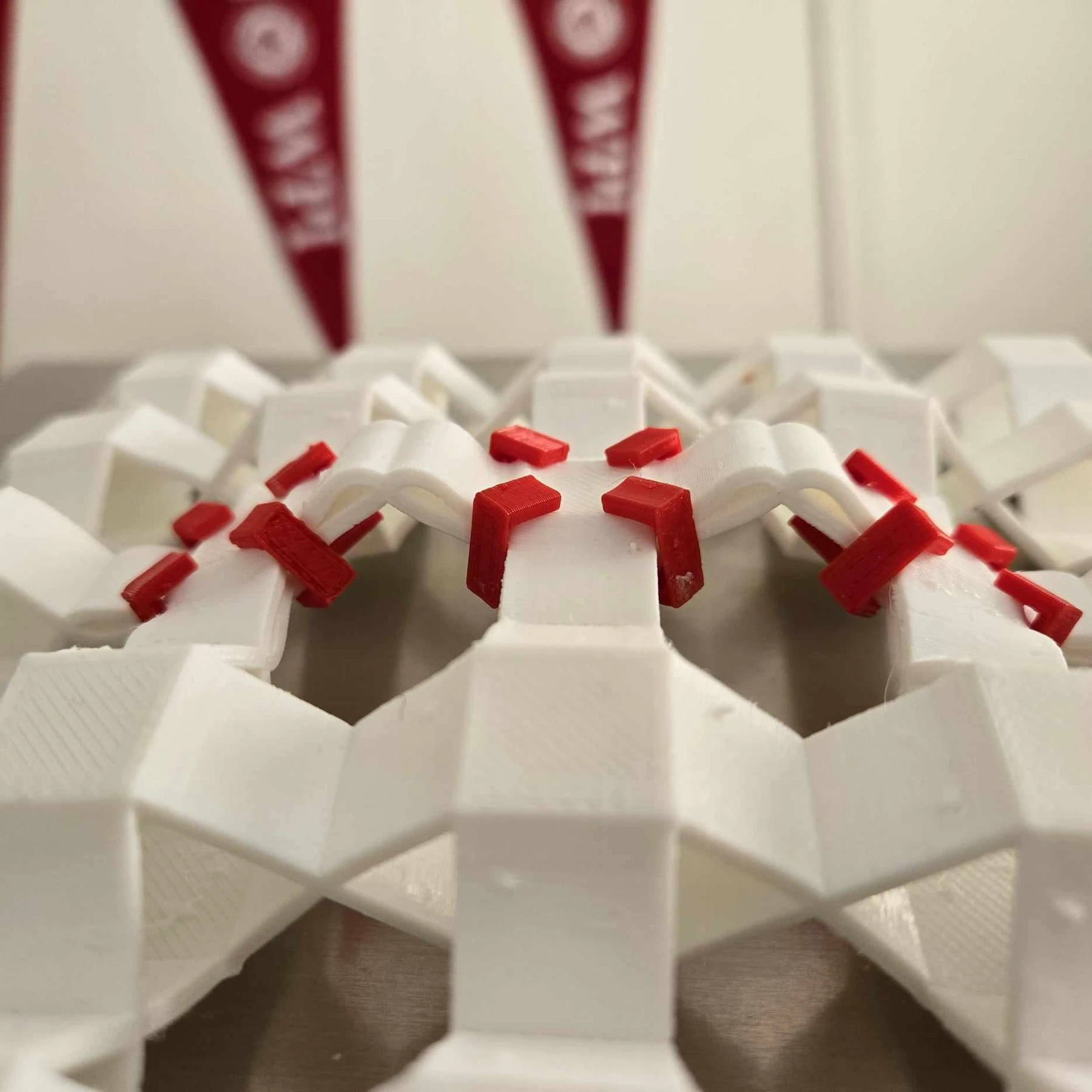
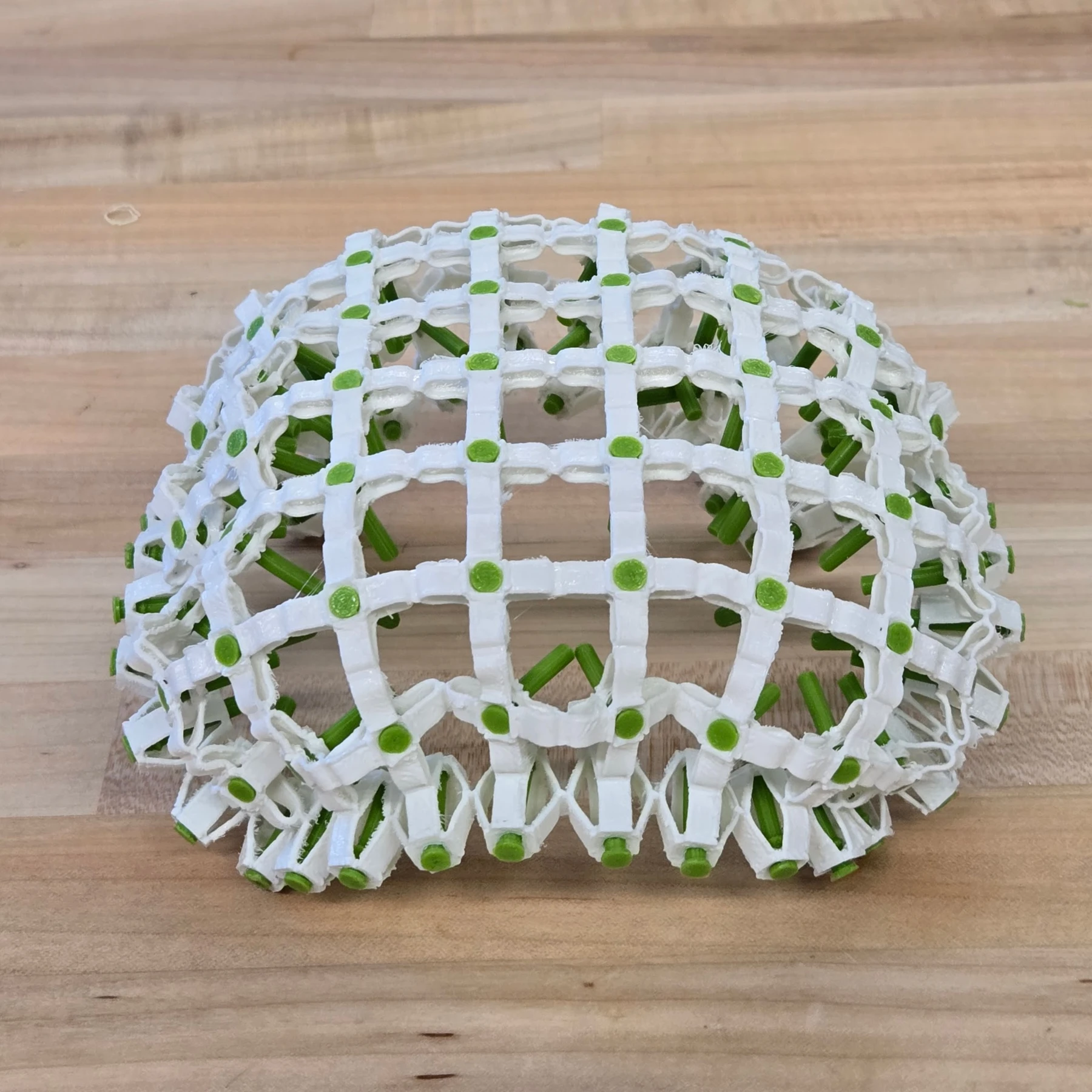
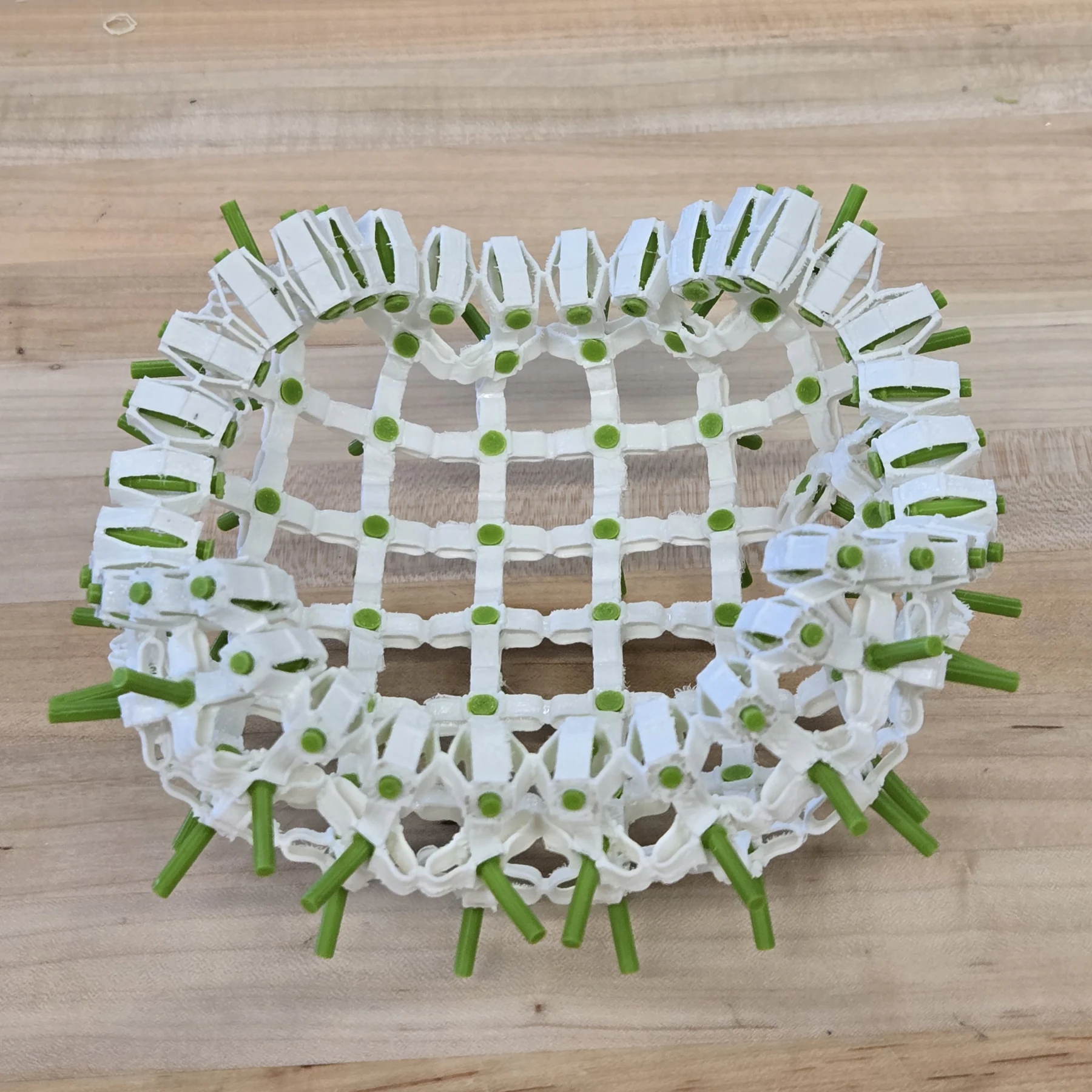
I also built a 20×20 array in a fixed frame to explore shapes at a larger scale. The sequence below shows several physical configurations of that array.
Syringe actuation and sensing
I next installed miniature syringes within a 5×5 array, developing printed holders and connections around the actuator. Driving groups of cells let me test center, cross, line, and edge patterns.
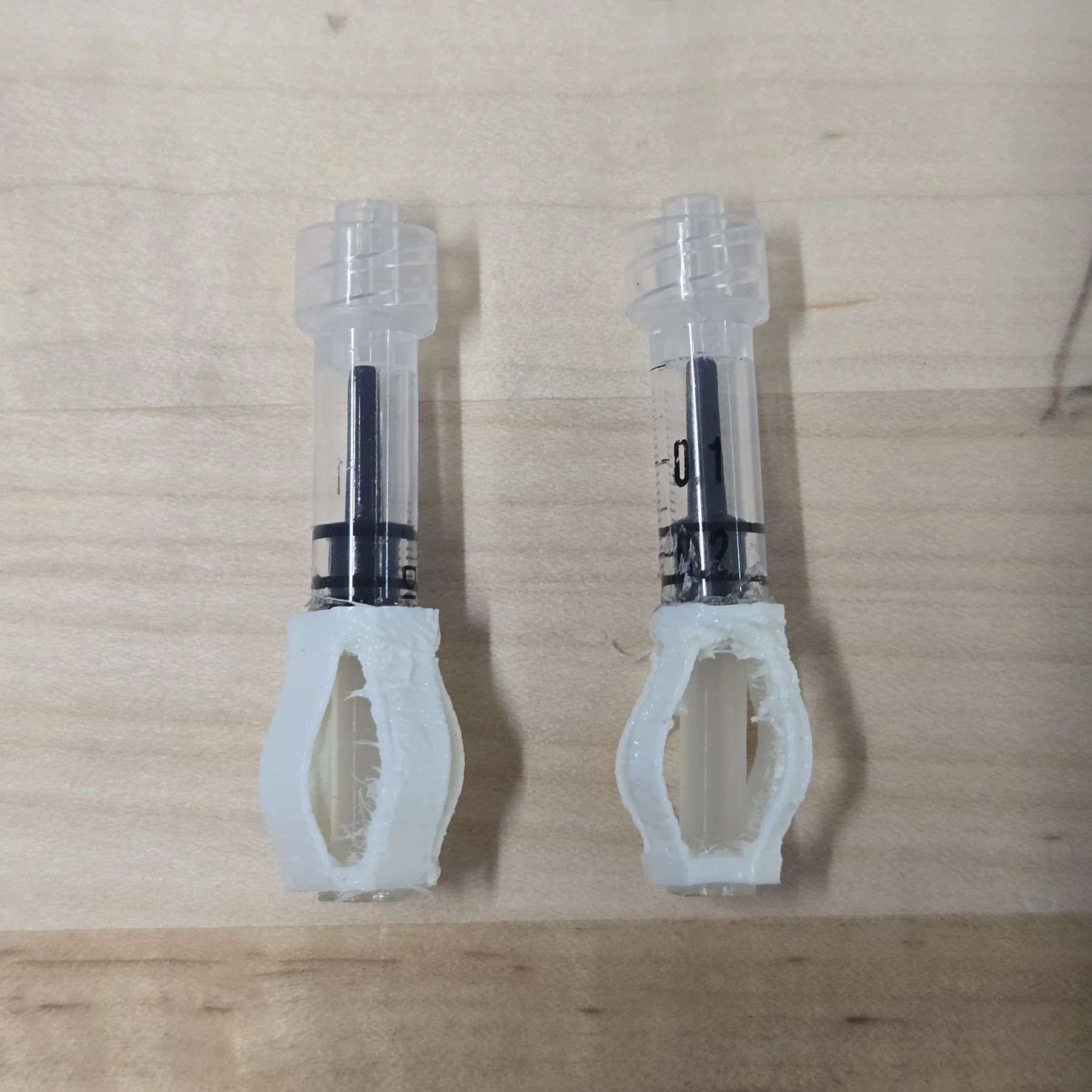
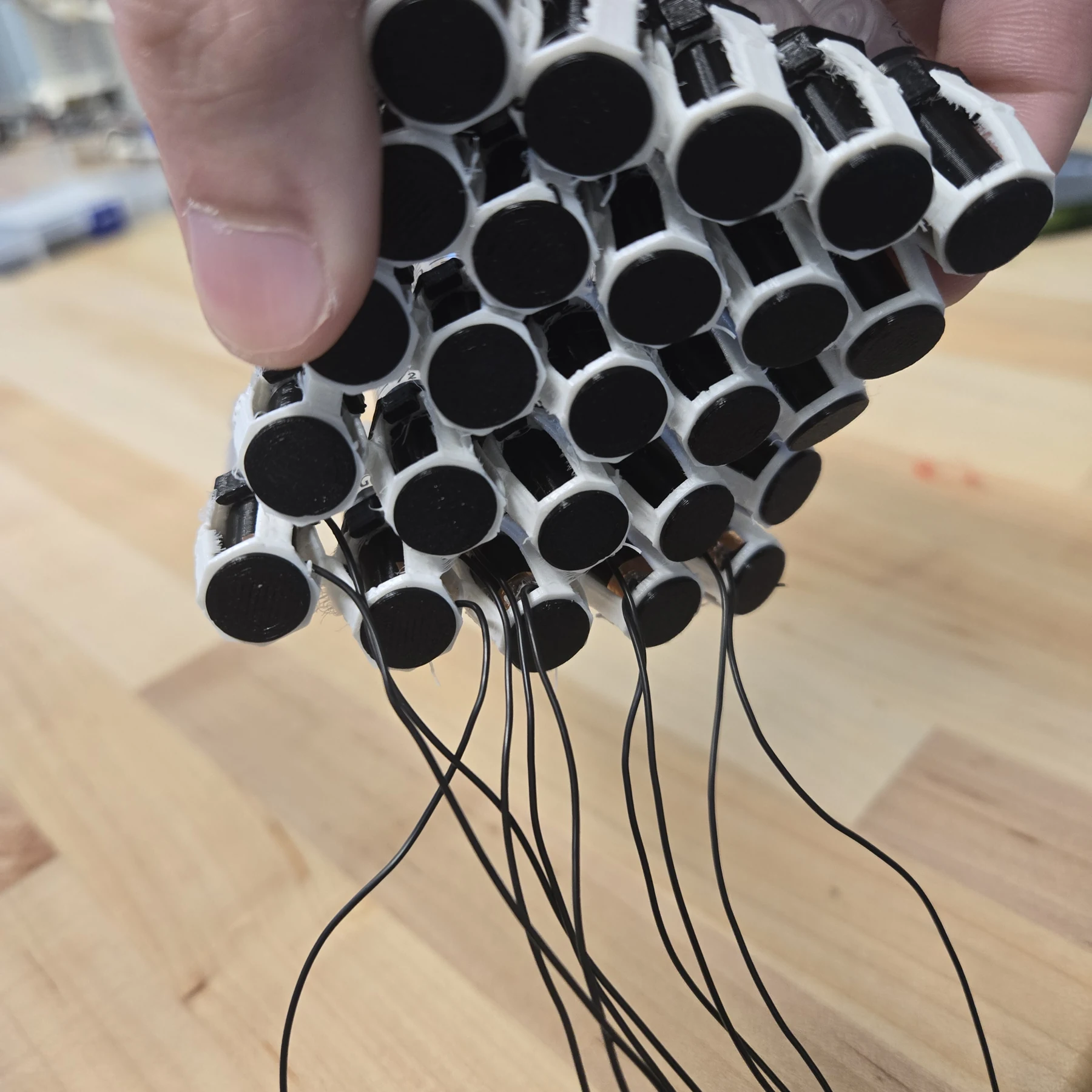
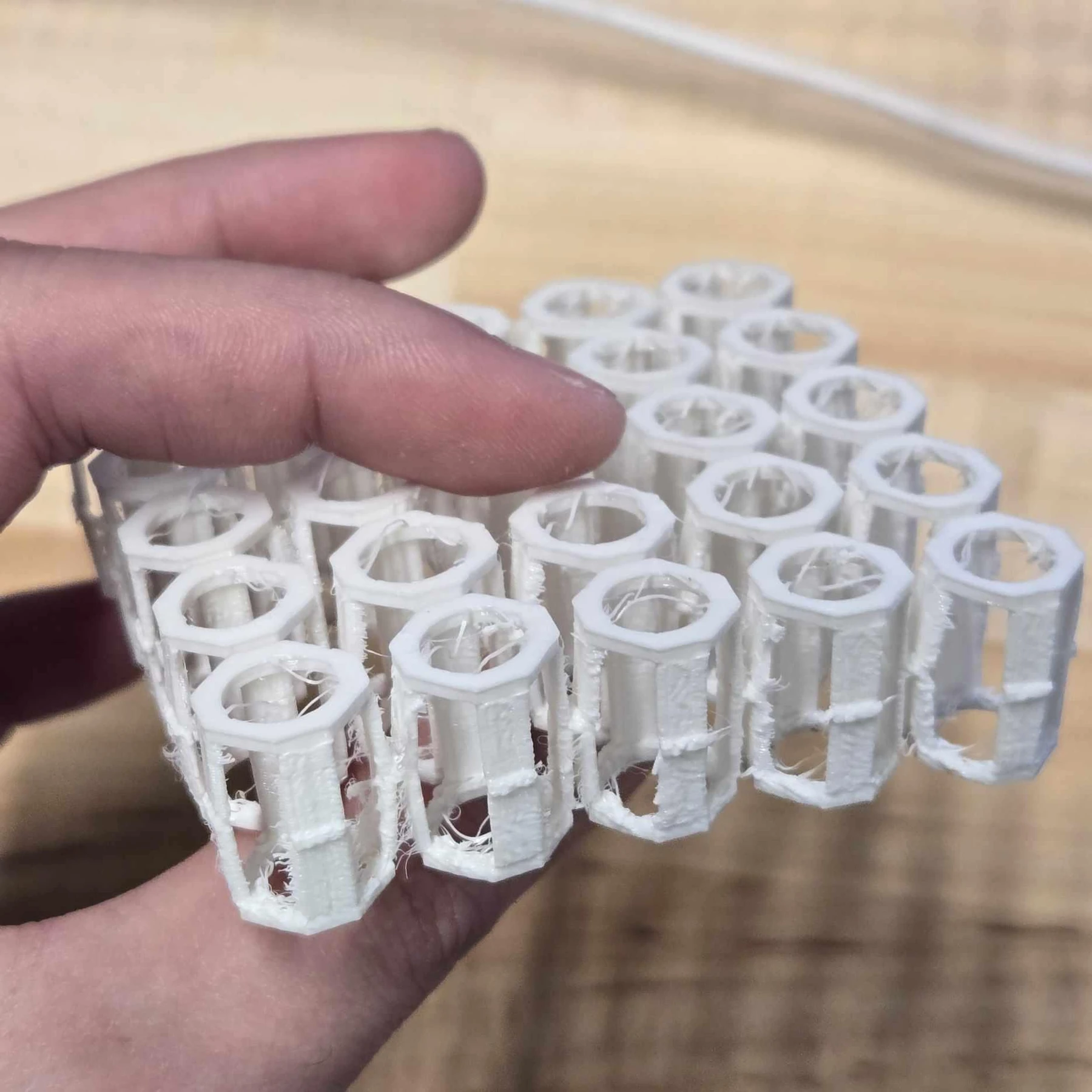
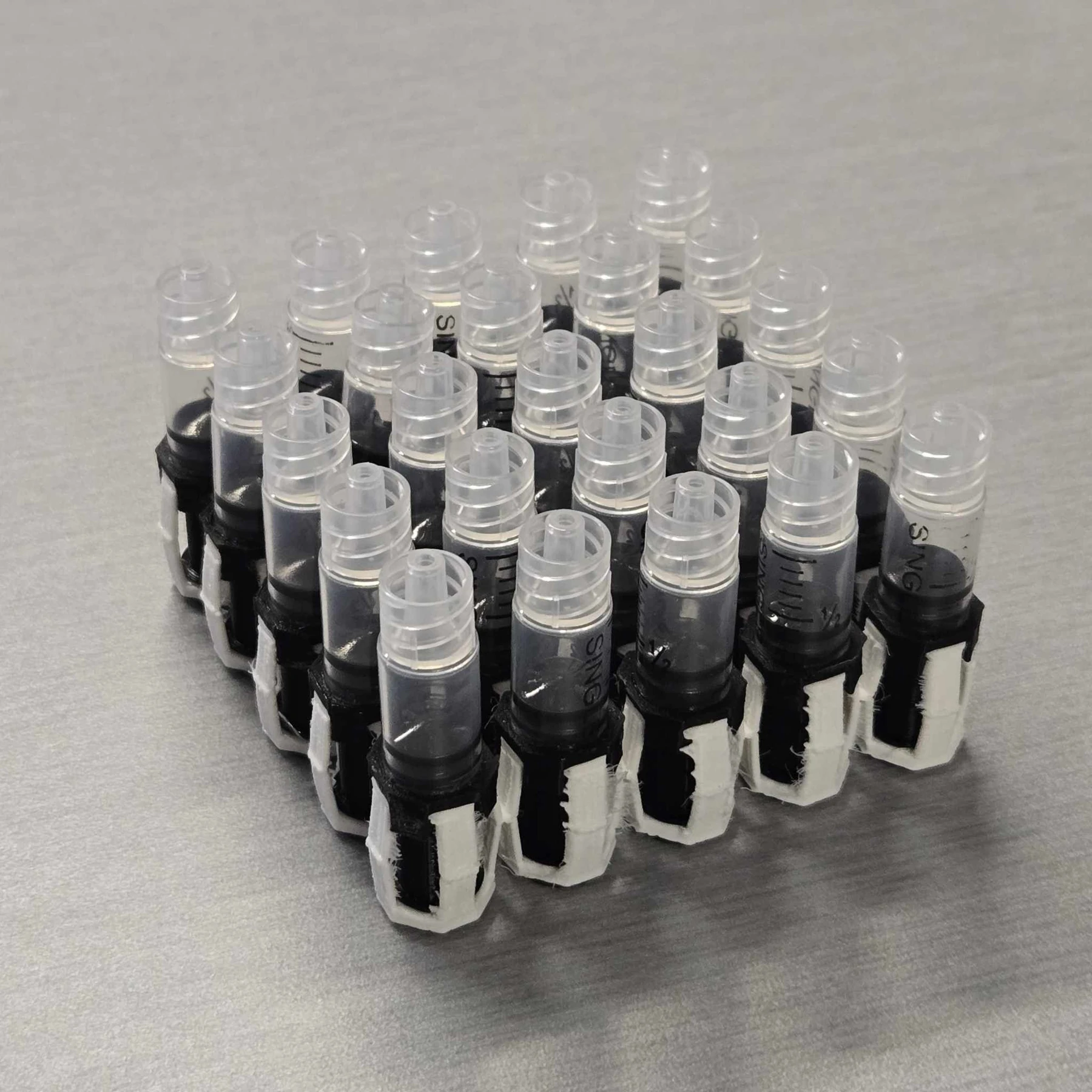
I also explored sensing at the cell level. This prototype combined syringe actuation with a strain-sensing element on the printed linkage, allowing me to observe the signal as the cell changed shape.
This sequence of builds led to the next design decision: print the pneumatic actuator and compliant linkage together in one cell, then reuse that cell across different robot bodies.
Monolithic cells and reconfigurable robots ↗